Some know these words as a CS Lewis quote from The Last Battle. Some people who know me well know these as the words I have incorporated in my second tattoo. I know these as the words that have defined my spiritual journey over the past couple years.
The concept first came to me during my sophomore year of college. I had been keeping an eye out for a meaningful image for another tattoo, since my first tattoo a year previous is only words. That semester, my curriculum included a lot of theology books new to me, along with Dante’s Divine Comedy. Something about the feeling of climbing upward towards God, journeying away from sin, darkness, and death into holiness, light, and life caught my attention. I knew that someday, I would get a mountain tattoo to remind me to always look upward, setting my mind on things above. Like Dante, I was on a journey, and I felt God calling me upward. Mountains also reminded me of Colorado and my roots, and I wanted to be reminded that my heavenly home is waiting for me while I find contentment and peace in this earthly home.
By what I assume can only be divine appointment, I had also recently read the Lewis’ The Last Battle, the final book in The Chronicles of Narnia series. I remember that when I read and listened to this book as a young child, it was my least favorite book. It scared me to enter into this final chapter of Narnia, and I hated the idea that the world ended. (On a related note, this is one of the reasons The Horse and his Boy is my favorite Narnia book: I love the idea that Narnia and the Golden Age of the Pevensies goes on, even if we don’t get to read about all of it.) Most of the book takes place at night, which gives a darker feel. It also made me sad to read about Susan’s fate (spoiler alert: her vanity makes her completely forget Narnia). This is why I was so surprised to learn, on coming back to The Last Battle, just how much I love this book.

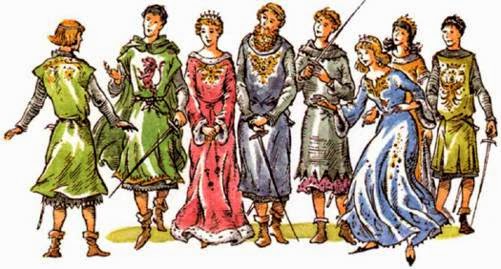
To give some context for this particular quote, a battle between the Calormens, dwarves and loyal Narnians has just taken place as the world is ending (hence the title). The Calormens believe they are killing the Narnians by forcing them through a stable door, on the other side of which lies the deadly god Tash. However, those who were faithful to Aslan, found themselves not in a dark stable, but in Aslan’s country, revived and youthful as kings and queens. The Pevensie children (minus Susan), Eustace, Jill, and even Diggory and Polly are all present. Aslan comes to greet them, and they watch him bring about the end of the Narnian world. Though they mourn for a time, Jewel the unicorn realizes first that the Narnia that just ended is only a shadow of the one they are now in.
It was the Unicorn who summed up what everyone was feeling. He stamped his right fore-hoof on the ground and neighed and then cried: “I have come home at last! This is my real country! I belong here. This is the land I have been looking for all my life, though I never knew it till now. The reason why we all loved the old Narnia is that it sometimes looked a little like this. Bree-hee-hee! Come further up, come further in!”
Jewel the Unicorn, The Last Battle
All the creatures and children run. They run with life like they never had before, and as they run, they find that the country is bigger and better than the Narnia they knew. It expands outward the farther they go, towards Aslan. Further up and further in. I weep every time I get to the last chapters of this book, and I hope that as soon as you finish reading this, you go pick up The Last Battle because Lewis’ words are much better than my own.
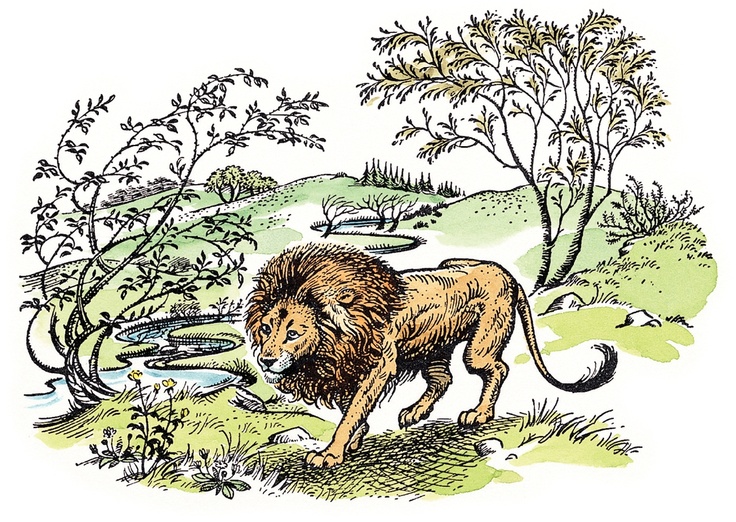
Maybe it’s because I wanted to go to Narnia so badly as a kid (I still look for tree branches in any large wardrobe I find), but I found myself drawn to this experience of running toward Aslan, toward God. I wanted this same sense of feeling that I had at last arrived at my true home, of which this earthly home is only a shadow. This idea, paired with Dante’s journey, needled at my heart and mind. Questions about the true humanity were only answered by the journey upwards and inwards. I discovered that the voice that is calling me is not only from distant heaven that I have to wait until after death, but from the present God, who calls me into himself. And the further up and in I journey into God, the more fully I become myself.
Pieces of this idea seemed to be everywhere, in everything I read and every conversation I had. You’ll probably catch pieces of it in most of my writing because it so greatly influences my theology. It changed the language of my spiritual journey. Instead of “getting closer to God”, I was journeying into him. He was never far from me; my heart was simply turned from him at times. In the same way that Dante found in the final circle of Paradise that everyone who seemed on the outer circles of heaven was actually fully in the presence of God, my spiritual formation became about leaning into grace and expanding my capacity for his love, rather than trying by my own power to “get to God”. I travel now further up and further in, knowing and loving God better with each step. In the “Already/Not Yet” Kingdom, I have both arrived at my destination and journey towards it.
If this sounds confusing and heady, it is. My poetic mind struggles to put this into easily discernible language, even as I don’t fully understand it myself. All I know is that these words helped me to understand my yearning for another home. It’s like I hear a song that I catch strains of in certain moments but can’t quite sing the melody. And it is my hope (in the surest sense of the word) that someday I will arrive at home, and the song will resonate through my being, as I gaze upon the face of him who faithfully called me all this time.
 Hopeful Wanderer
I love this, Sara! So well written and I love how you are “journeying into God.” Thanks for writing your heart!
LikeLike