
When I first applied to the Torrey Honors Institute, the Great Books honors program at my university, I answered in my application that my two favorite books were Brothers Karamazov and The Little Prince. While I did enjoy reading both of these for school, my sole motivation was to portray myself as intelligent and pretentious enough to get into a prestigious program, and I assumed that loving Russian novels and classic French children’s literature would do the trick (Knowing my 18 year old self, I probably made sure to include that I read Le Petit Prince in its original language). However, upon revisiting these two vastly different texts, I have found that they are actually part of the same conversation, and both develop idea that carry into many other texts in the Torrey curriculum and have shaped my own journey over the past 3 years. Perhaps I was onto something even back then.
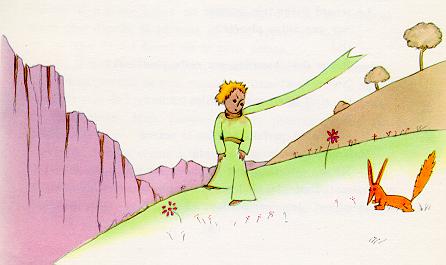
In The Little Prince, a boy finds himself far from home, learning about the way of the world from his innocent and curious point of view. On his journey, he finds that things are beautiful not because they are grand or magnificent, but because they are loved by him. He loves a rose, and though there are many roses, this particular one matters because she belongs to him. He also loves a fox, who wants to be tamed so that it may know the unique step of one boy among many. There is a touching moment when the fox says that he will cry when he sees the wheat because it is the same color as the prince’s hair, and in this, Antoine de Saint-Exupéry communicates the beauty in the sadness of parting. It is sad to leave something special, but it is beautiful to tame and be tamed for the sake of that moment when he sees the wheat.
A similar moment happens at the end of Brothers Karamazov, when Alyosha gives a speech to a group of adolescent boys mourning the death of their friend. It is good for them to cry and be sad about the injustice of his no longer being present, but it is also good to laugh and be glad. The memory of Ilyushechka can be a light that inspires the boys to be good and love with the active love of Jesus Christ. This active love does not seek answers to suffering; it simply brings joy and peace into the dark.
Alyosha could be a grown-up version of the little prince. He maintains a child-likeness that internalizes the sin and suffering of the world, only to become an outpouring of love and innocence. He invites the cynics, like his brother Ivan and the young Kolya, to fix the injustice of the world by entering into the painful places to find beauty there, and in doing so, relieve the pain of just one. Why should anyone eat pancakes at a funeral? For the same reason that the prince watches 44 sunsets in one day. Mourning can be lovely. The prince knows this, and he teaches his new friend, an airman who tells the story of the prince, to gaze at the stars to remind him of his rose and his home, saying “the stars are beautiful, because of a flower that we cannot see.” When the prince leaves, the stars become beautiful to the airman because of the prince that he cannot see.
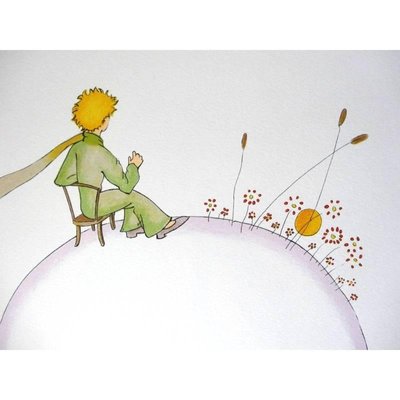
Both the prince and Alyosha can smile even as they weep because they find the beauty of things that die and pass away. They are beautiful and important, not in spite of their transience, but because of it. There could be any number of roses, any number of suffering boys, yet the absence of one is deeply felt: the rose who is “threatened with imminent disappearance.” And so we in our foolish humanity continue to tame things and letting ourselves be tamed for the sake of the beauty of transience. We let ourselves love ephemeral things, and we cherish reminders of what, or who, we’ve lost. We love people because they will not be with us forever. We watch the sunsets and celebrate the end of things, why? Because of the rose that is important to one boy. Because the sweetness of loving may not solve all the suffering in the world, but it eases the pain of one, and that is enough.
I would not cast anew the lot once cast,
Or launch a second ship for the one that sank,
Or drug with sweetness the bitterness I once drank,
Or break by feasting my perpetual fast,
I would not if I could, for much more dear
Is one remembrance than as a hundred joys
Christina Rossetti, They Desire a Better Country
 Hopeful Wanderer