As I sit in my living room, I watch the snow from yesterday drip off the trees, making that lovely pitter patter sound. The world that was so icy and cold yesterday is thawing, and the clouds that hung heavy over the hills broke to reveal a hazy blue sky. The sun casts sparkles on the droplets in the branches. I can’t help but think, “What a perfect representation of nature’s observance of Lent.”
I don’t pretend to know much about Lent. Until very recently, my experience of it was that it was a time to give up sweets or social media, until inevitably people gave up or forgot about it, and then Easter rolls around. Easter was a nice reminder of Jesus’ resurrection, but it was mostly a random holiday in spring where everyone dressed extra nice in florals for church and makes an Easter egg hunt outside (unless of course you live in Colorado, in which case it probably snows). I enjoyed the specialness of responding “he is risen indeed!” in church, and the chocolate bunnies were a nice perk, but the significance of the day was lost on me. How could it not be? How could the warmth of spring have its true value without the contrast of winter’s cold?
In my very minimal research on the history and purpose of Lent, I discovered that Lent, while not actually mentioned or taught in Scripture, is based off of Jesus’ 40 days in the desert wilderness. Since the Council of Nicaea, Lent has been a part of the Church calendar. It starts 40 days before Easter, and it is meant to be a time of mourning, repentance, and dwelling in a self-imposed desert before the joyous celebration of Easter. Sometime between 325 AD and now, the season was reduced to a period of denial in the interest of self-help and probably produces more self-righteousness than true humility and dependence on our savior.
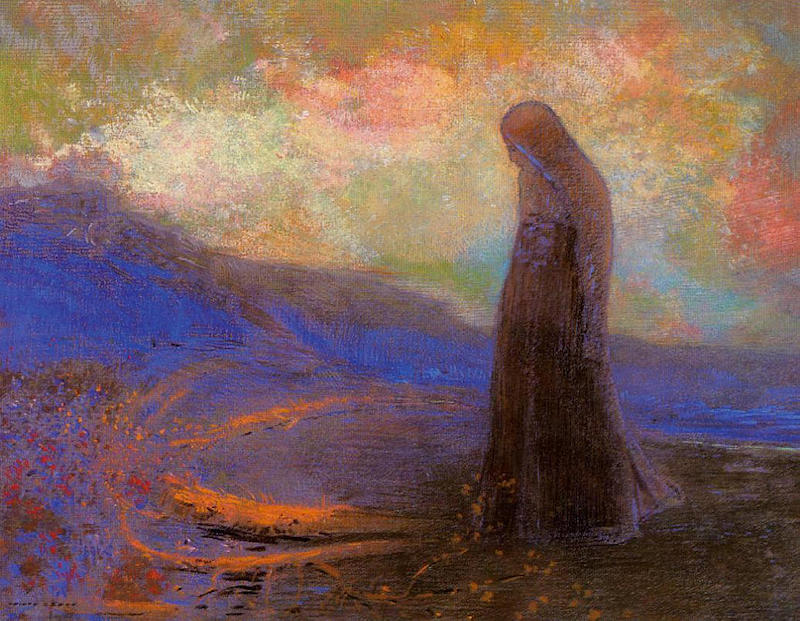
I first began to participate in a true experience of Lent through a Lent Advent devotional, created by Biola’s Center for Christianity and the Arts (I cannot recommend this devotional enough, and they also have an Advent one. Check out the link here). The creators of this devotional blend art, music, poetry, and Church tradition to guide people toward Lent’s original purpose. Through its variety of mediums and representations of beauty, I learned that Lent should be a season of turning. Of turning away from ourselves and towards God (in essence: repentance.) We should only be attentive to ourselves enough to identify what worldly or fleshly thing is keeping us from God, and then we need to pray for grace because it is not by our own power we turn towards God. If at any point, we are deceived into thinking “if I could only give up __, then I would be holy,” we are doing Lent wrong. I don’t think Lent can produce piousness, righteousness, or holiness because it is a human created thing (Man is not created for the Sabbath, but Sabbath for man, Mark 2:27). Only God can produce that in us, but we have the opportunity to join with Christians around the world in participating in one means of grace.
If Easter is a day for celebration, Lent is a season of mourning and suffering. I don’t mean that we should wear black or force ourselves to be sad, but there is some beauty and goodness to giving ourselves over to experiencing the true depravity of humanity. Lent reminds us of the evil of sin; it separates us from God, the source of all goodness and light. We dwell in the darkness of winter and death with no hope. We are responsible for bringing suffering into the world. If we move past that truth too quickly, it diminishes the sacrifice of Christ on the cross and the incredible gift of salvation. One of the most dangerous prayers we can offer is, “Lord, show me my sin,” because he will. But, thanks be to God, he will also show you himself and his redeeming power! How much easier will it be to turn from yourself and towards God when you have seen the evil within you! How much sweeter will the rising of the sun on that blessed Easter morning be when you have journeyed and suffered through the darkest of nights!

Maybe you are thinking that Lent is too liturgically high or inaccessible for you. Well, another way I like to think about Lent is the setting of a table. The best of feasts has a table set lovingly and carefully with the best dishes, the most beautiful centerpieces. During Lent, you are setting a table in preparation for the feast to come, because Lent is a time of preparation for something good. You are hopeful for the table to be filled with a bounty of good food, but for now, it is empty. How are you setting the table for God to fill it? Lent should make you uncomfortable with the emptiness of the table and longing for it to be filled, knowing that you cannot fill it yourself. To take the metaphor further, are you inviting others to the feast? Lent is not meant to be a solitary activity but a communal experience that draws us together into the presence of God. How can we, as the Bride of Christ, learn from the turning of the seasons and prepare as one during our present winter for the feast of new life?
 Hopeful Wanderer