Thoughts on Thanksgiving

The last Thursday of November is one of my favorite days of the year. I have fond childhood memories of traveling to visit or hosting aunts, uncles, cousins, and grandparents, watching the parade while enjoying cinnamon rolls, chilly autumnal walks after dinner, sometimes a trip to the movies if Mom was working a nursing shift, and of course, at the center of it all: the Thanksgiving table.

A couple of my favorite memories from Thanksgiving that I think emulate the meaning of the day:

One year we were hosting lots of people, including a neighbor’s relation we had never met before. As we were getting cooking and setting the table, a woman walks in the front door with a dish, walks all the way into the kitchen and sets down the dish on the counter, and my family greets and welcomes her, thinking she is the invited relation arrived a bit early. She was very lovely, but confusingly, she didn’t seem to know our neighbor. Turns out, she had walked into the wrong house. We tried to convince her that because she set the dish down, it was legally ours by the laws of Thanksgiving, but she didn’t buy it and left to find her intended dinner 🙂 Fortunately for her, and for anyone needing a table to gather round, in our house, the door is open and strangers are welcomed as old friends.

Another year we all went to stay with our cousins in Oregon. They had just finished remodeling their kitchen, just in time for the big meal. However, not all the furniture was ready – the table and chairs were still in their flat pack IKEA boxes. So that year, our preparation included not only cooking the food and setting the table, but assembling our own chairs so we had something to actually sit on. In a modern day version of barn-raising from Little House in the Big Woods, we were literally building a home together and celebrated with a feast.


It’s one of the things you don’t really think about until you move away from the US: the whole world does not celebrate Thanksgiving. The world does not stop for 2 days for everyone to travel across the country to eat a meal. You don’t automatically get a few days off work. So while I know it is ultimately just a holiday full of traditions unlinked to anything truly meaningful (not like, you know, the miraculous incarnation of God or the earth-shaking resurrection), Thanksgiving has come to be a special day for me as an American living in the UK.

I’ve had the privilege of hosting 5 Thanksgiving dinners in my home in Oxford. I take the day off work and spend pretty much all of it cooking while watching something like Sound of Music, then welcoming as many friends as fit around my table to stuff ourselves silly. Over the years, it has remained special to me because I’ve worked to make it so, and I’ve found the meaning of it has changed and shifted, and in some ways deepened. Here’s some thoughts on how:

Thanksgiving invites homecoming. For many college students who’ve gone out of state, it’s the first time in the year we brave the stressful holiday travel and return home in the semester, eager to rest before finals and to pet our dogs and cats. Now that Colorado is a bit further away and it’s not very realistic for me to travel all that way, Thanksgiving reminds me how thankful I am that Oxford has become a home. God has called me here, and He’s given me a passion for opening my home to others. I’ve written and spoken previously on hospitality and home, so I’ll just say here that I love that Thanksgiving fills me with that longing, not for a romanticized, nostalgic version of my childhood home I can never really return to, but a longing for our true home. Wherever I am, however much I feel like I belong, whatever comfort I can take from the familiar, I know where my true home is.

Thanksgiving brings family together. I know family isn’t easy for everyone and sometimes the holidays are just something to grin and bear, but I am blessed to have a wonderful family. Despite our differences and tiffs over the years, we really love each other and love being around each other. Though when I’m in the UK family is far away geographically, when I cook the recipes that I used to make with my family, knowing that they are making them an ocean and a continent away, I feel close to them in ways I can’t explain. I am also thankful that I have friends who have become family to me. I am known and loved here.

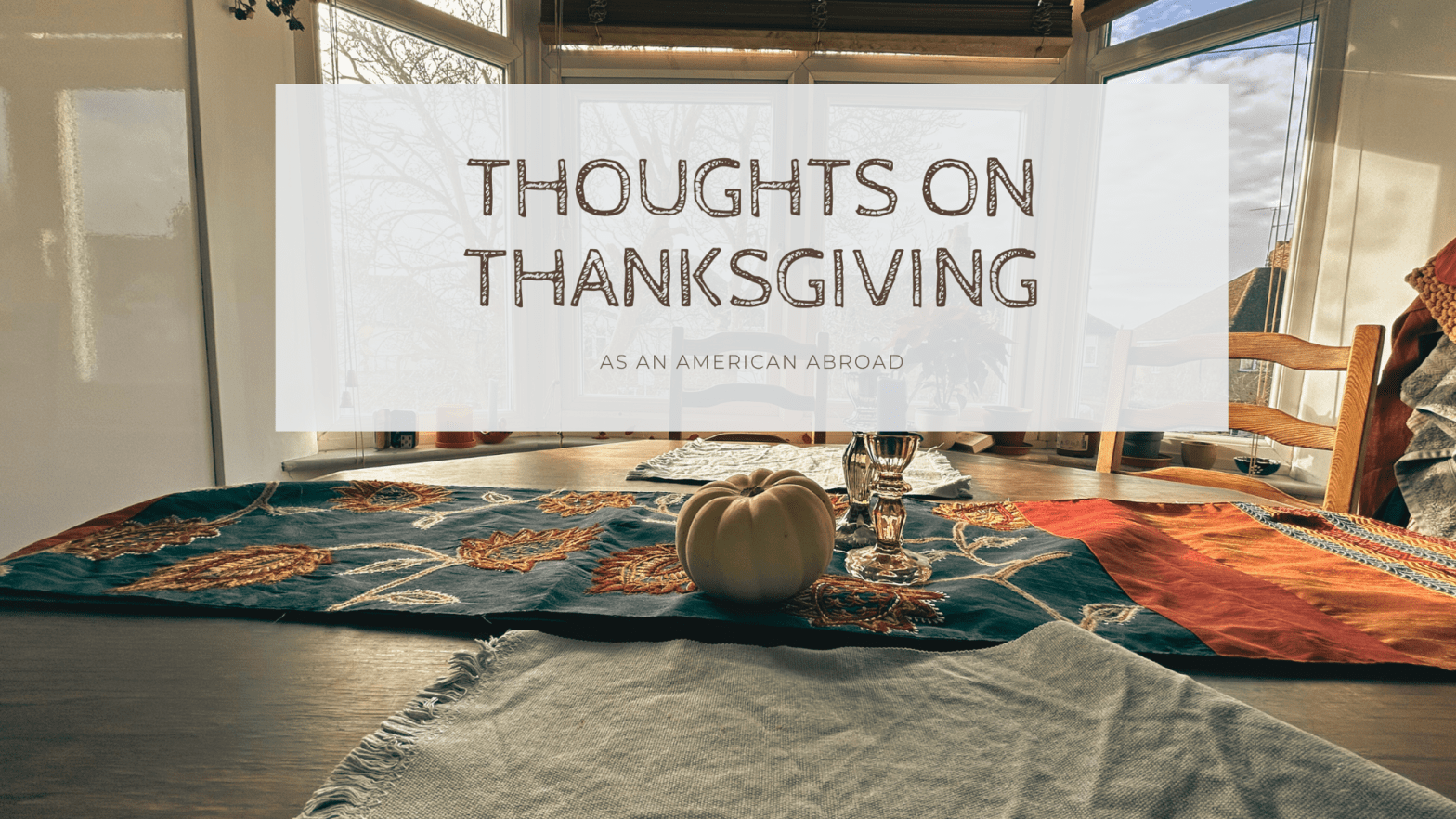
Thanksgiving centers around the table. As the youngest sibling, setting the table somehow always fell to me. Though I might have complained as a child about it (sorry Mom), I’ve come to appreciate the joy of setting a table in the spirit of hospitality. We eat off the fancy plates and use the dining room silverware on Thanksgiving, with chargers and table runners and water goblets and bread plates and everything, because sometimes days are special enough for it. Here at my little flat in East Oxford, I might not have any matching glasses or enough dessert plates and bowls (definitely ate my pumpkin pie out of a mug this year), but I have a table where we can gather and be merry. Top tip: candlesticks are relatively cheap and go a long way towards making a table feel very fancy.

Thanksgiving can’t be Thanksgiving without food, and lots of it! Isn’t it amazing that God created us with the basic need of nourishment, yet He also created it to taste SO good, with so much variety and flavors?! There is something so powerful about eating together, and in turning a meal into a feast. I may not have the time, money, or oven space to recreate every single dish we’d normally have, but I’ve adapted and created something new each year, which is just as fun. Don’t worry, I still have leftover pumpkin pie for breakfast the next day, seasoned with Trader Joe’s Pumpkin Pie Seasoning.

No, Thanksgiving is not what it used to be, and it never will be the same in the UK. I think every year I feel at least a little melancholy about what and who is missing, but it’s a melancholy that’s part of the recipe to create something new.


I’ll end with answering question I get asked a lot in the UK: What do you actually eat on Thanksgiving?

A meal traditionally includes:

  • Full turkey
  • Mashed potatoes
  • Vegetable side (my favorites are maple bacon brussel sprouts, honey sage carrots, lemon garlic asparagus, and rosemary sweet potatoes)
  • Gravy
  • Cranberry sauce
  • Stuffing
  • Pumpkin pie and whipped cream for dessert (no joke, the best pumpkin pie in the world is actually from Costco)
  • To drink, Martinelli’s sparkling apple (like a fancier US version of Schloer)

You might also have:

  • Winter salad
  • Bread rolls or cornbread muffins
  • Mac and cheese or other pasta salad
  • Other pies like apple or chocolate cream

Some weirder American dishes:

  • Green bean casserole (topped with French’s Crispy Fried Onions, seconds please!)
  • Cheese ball (great appetizer, way too easy to fill up on before the main course)
  • Sweet potatoes topped with marshmallows (no thanks)
  • Ambrosia salad (even worse than the sweet potatoes)
  • and the most American of them all: the Turducken. A chicken, inside of a duck, inside of a turkey. This is the freedom our forefathers fought for. Whenever you take a bite, an eagle caws in the distance.

So thank you to those who help me celebrate Thanksgiving in the UK, for sharing my home and gathering around my table. Thank you to my family for cheering me on and loving me, and for saving me that piece of Costco pumpkin pie I know you put in the freezer for me.
Looking for the Light

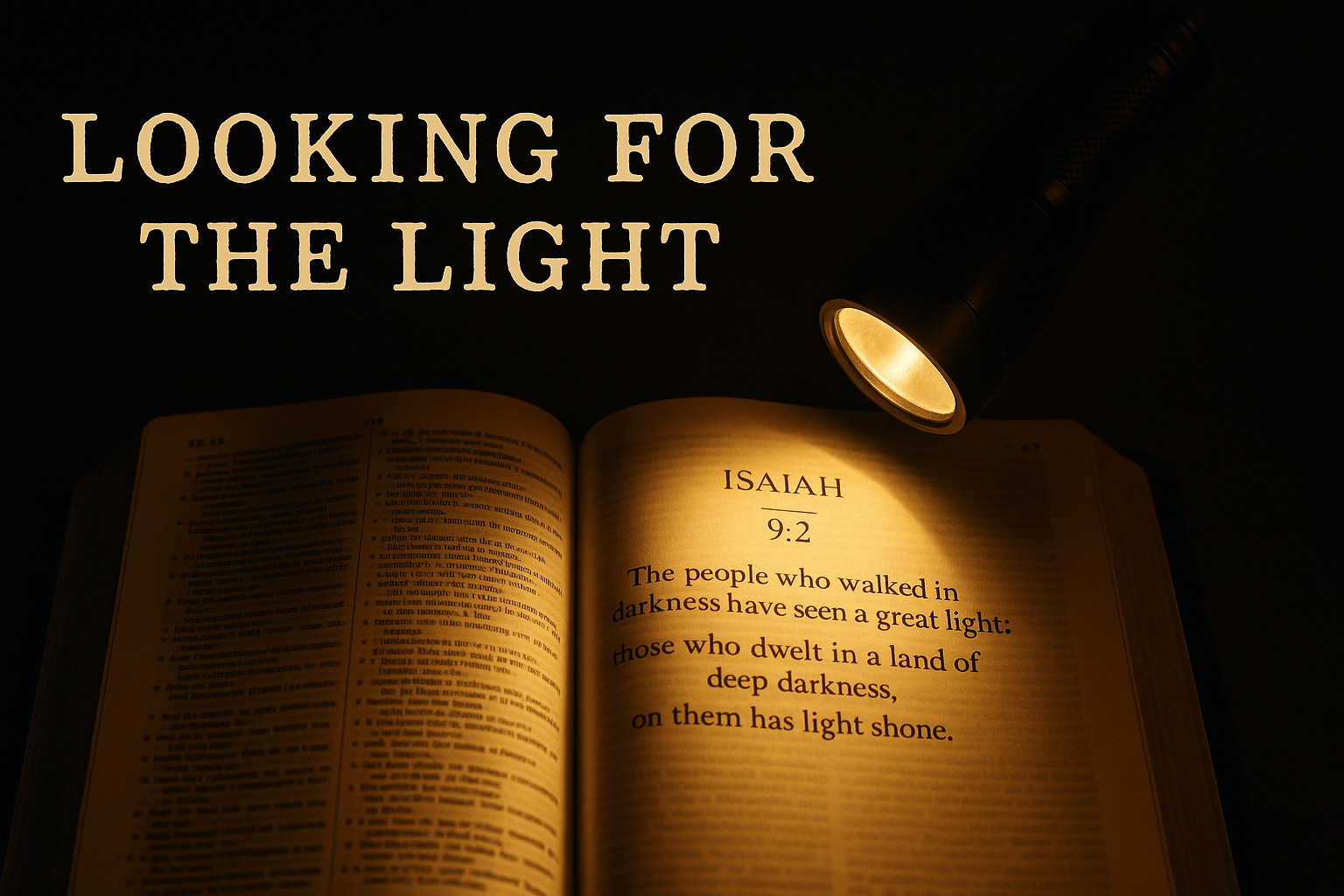
Last month, I had the privilege of teaching a few breakout sessions on theology at a summer youth festival. The theme of the weekend was “Light in the Darkness,” so the theology sessions were meant to follow the light throughout God’s story, from Creation and the fall, to Jesus as the Light of the Word, to the Spirit lighting the flame for us to carry in a dark and dying world. I challenged listeners to fight against the dark by creating beauty, whatever that looks like for them, and ended with my own offering of beauty. Here’s the spoken word I wrote in stolen moments of quiet trying to find decent coffee somewhere on site when our pitch lost electricity:

At first, nothing
Just a stillness and waiting
For… something
Then creation
Knowing and being in time
I wonder:
Did it happen in a sudden burst of light?
Like a cosmic match striking
Against the reverberation of a voice -
Or did it dawn slowly and steadily?
Lifted by a gentle whisper of a song
Coaxing molecules together
In form and order
Until everything that came to be
Teemed with life
The Spirit hovered and told us
We were creatures destined for the sun
And we walked in the immortal
Invisible light

But darkness called
And cast a shadow over
Goodness and beauty
A single question convinced us
We were made for more
As if there was anything more to be had
Than everything we could see

In fear we hide
In chaos we take comfort
In darkness we are trapped
We forgot the truth
We were creatures destined for the sun
And we fell in love with a lie
Entering the gate that demanded
Abandonment of hope

Can the dawn break the lock on the gate?
Or are we doomed to eternal twilight?
Has the glory departed this place for good?

Listen. The story isn’t over.
Deep darkness can’t cover the great light
Sure as the dawn, he is coming
Our golden king

The Word that lights our path
The dayspring carrying creation
Through its birth pains
Sure as the dawn, he is coming
Our golden king

He smooths over the worries we catastrophize
He binds up wounds we cauterize
He renews our will as we cast our eyes
Sure as the dawn, he is coming
Our golden king

So though we walk in deep darkness
We will not be afraid
We will speak the light to a dying world:
That the Spirit of Truth has lit the flame
By its burning light we can claim
We are creatures destined for the sun
And we walk towards the immortal
Invisible light

Help My Unbelief

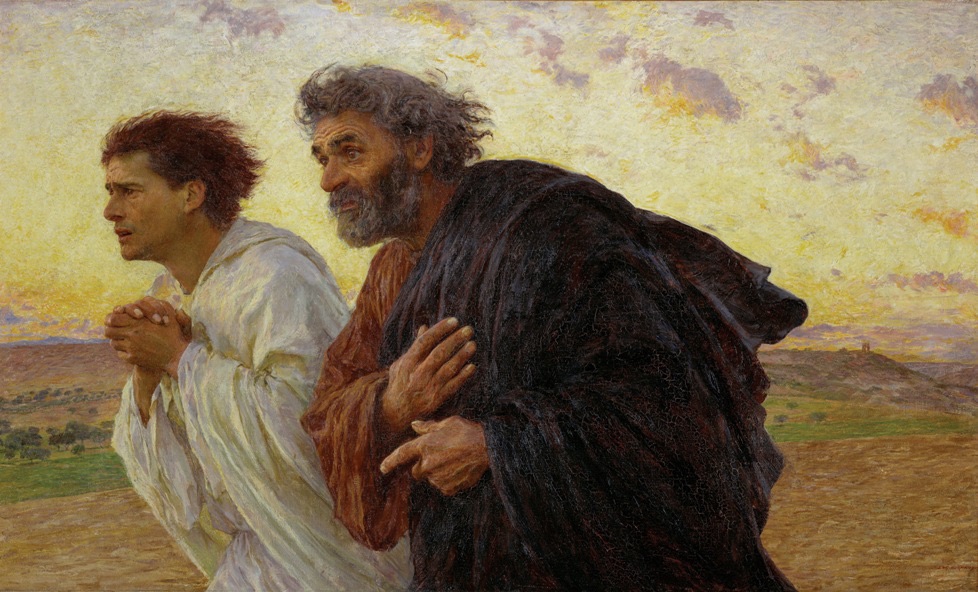
Last year after Easter, I traveled to Paris and was captured by a painting in the Musée D’Orsay of Peter and John racing toward the empty tomb after hearing the strange story from the women who were there first. I’m still thinking about it a year later. I’ve also been thinking a lot about how we comprehend knowledge and wisdom as light, represented beautifully in the painting. In response, I wrote this little piece tracking the Good Friday to Easter story with all its surprising twist and turns for those experiencing it. It’s too long to be a poem, too choppy to be a short story, so it’s just become my prayer.


They didn’t understand. The disciples might have been walking with the light of the world but still they couldn’t see by it. They might have eaten the bread he offered but still they walked away hungry. They might have been washed by his hands, but their hearts were still tainted by doubt. They might have heard the warning to stay awake, but still they fell asleep when it mattered the most.

He didn’t understand when Jesus looked him in the eyes and said, even you, you who I renamed and repurposed, will deny me. Three times, three questions that should have been so easy to answer with a resounding yes that is my Lord and I will follow him because he penned the Words of Life! Where else will I go? But three chances came and three times Peter shrank back. He wept, not knowing yet that love waited for him on the shore of the sea.

They didn’t understand, couldn’t comprehend that he came to forgive, that he could pray for their forgiveness even as in ignorance they crushed his spirit and broke his body. The ones looking on never imagined that forgiveness wasn’t just for the thief hanging next to him – it was freely offered to all, as he opened his arms of love upon the cross. Turns out, sin was the jailer and we were the prisoners he came to set free. We all were the sick who needed a doctor, we all were the lost sheep bleating for a shepherd, we all were the unclean and unholy outcasts desperate for a way into the innermost part of the temple.

We can’t understand, not completely, how the weight of every broken heart, every wrong and warring will, every failure and fear, could sit upon two pieces of wood. Even more astounding is how all the love of the universe could be contained in the heart of a hazelnut. And yet it is so, for those who have eyes to see and ears to hear. Hallelujah for the cross.

They didn’t understand. When they saw him beaten, bloodied, berated, they turned away. The sight was too incongruous to bear, too empty of glory, too vulnerable and naked. The cup was too full for them to drink, even if they wanted to. So in denial and detached, they scattered. Death took the reins, and the world held its breath, unable to cry out for its creator.

They didn’t understand that when he said “It is finished” with his last aching breath, it wasn’t in lament of the end of all things. No, these words proclaimed the completion of salvation, the big finale boss battle between life and death. These words were his rallying cry of victory, once and for all, and we take up the cry with all the saints who’ve run before us, all the hosts of heaven. And the darkness trembles when we declare the light will not be overcome. 

They may not have understood, but they began to catch glimpses of the truth, when with a great ripping of the heavy curtain, the Holy of Holies spilled out to the earth. Creation was suddenly filled with so much life that the dead began to wake and walk and the silent rocks split with praise, just as he said they would. The judgement of night that had fallen over them broke, as love illuminated the earth anew, like the sun bathes the horizon in a golden glow with its last strength of the day.

A soldier, of all men, saw. Surely, beyond doubt, beyond questioning, beyond powers that be, beyond human reason, just on the other side of the thin veil, surely this man was the Son of God. Only he could rescue, only he could make dry bones come awake, only he could take our fearful, trembling prayers and make them weapons that drive away evil. And we crucified him. How we should weep.

They didn’t understand the women who brought this story from beyond the grave. Unable to wait a moment longer, Peter and John raced in desperate hope to see for themselves, not daring to believe but clinging to frail hope. Maybe they finally understood what he meant when he said they only need a seed-sized faith, but the white linens folded unused only hinted at the full truth.

Mary must have run back with them after delivering her tale, looking to understand this strange person who sat in the place of her Lord, early that morning. Her task of herbal anointing useless without a body, she wandered out of the tomb in grieving wonder. She couldn’t hear him the first time he said her name, this man she had followed and loved, so ever patient he said it again until her whole being turned anew. Then, she understood. Here, in front of her, her Lord. No wonder she wept and clung to him, wouldn’t you?

Thomas didn’t understand. Their stories didn’t line up. It goes life then death then grave. Walking and talking never come after. How on earth could the story end otherwise? Then the risen one appeared, and doubt melted in the hands that bore the marks of mockery. 

They didn’t understand. Though Cleopas and his companion walked with the one everyone was talking about, they nearly missed the moment. The Word was now speaking of himself. They were hungry for more and begged him to stay, so he broke bread with them, and as he offered it, they realized they were being fed by the bread of life. And their hearts were burnig, burning with what? Unexplainable joy, uncontainable faith, unrelenting adoration? Whatever it was, it must be shared.

Now another early morning dawns behind a blanket of grey. Light may not have come in a brilliant flash today, but still I can see more than I did before. Still have more glimpses of the new world dawning. The Word reveals itself afresh, and my soul cries out, he is risen indeed, help my unbelief! 

A Letter

This is too auspicious not to share.

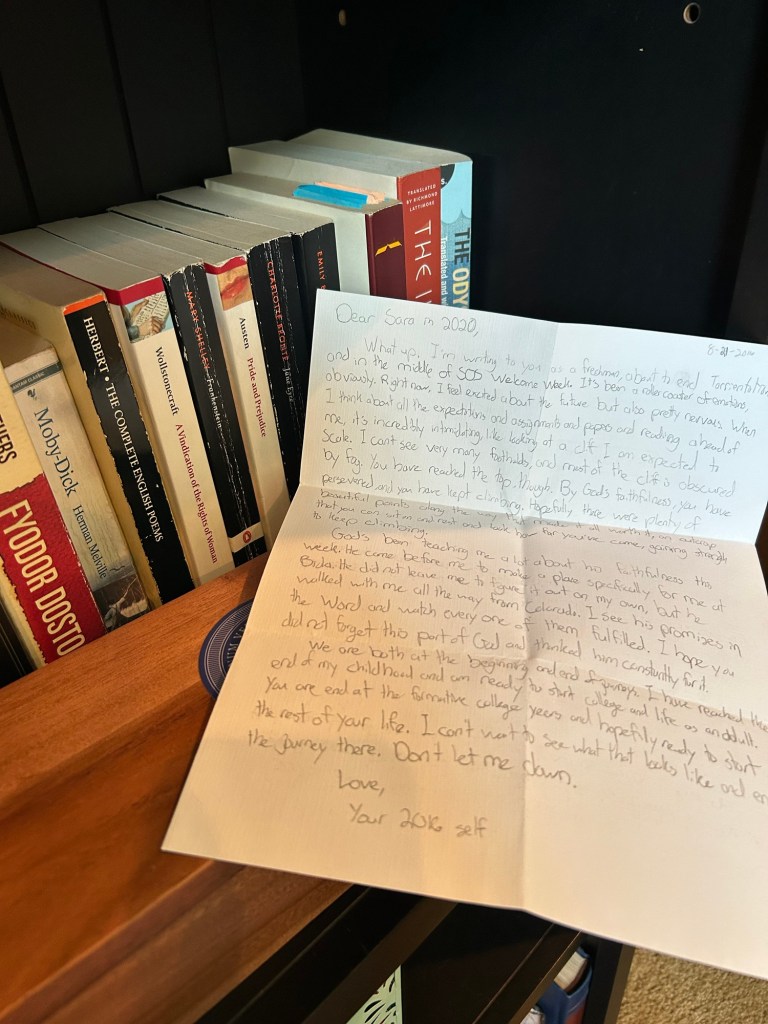
I’ve just arrived in Colorado for a little rest and restoration after a very busy term and packed start to the summer. It’s the same bedroom I grew up in since I was 4. The furniture has changed, I’ve changed as I’ve grown, but the view out the window has not. As I’m going through the mail that’s accumulated from the last time I was in the country, I find a letter from a dear friend (thanks Marsh) that is actually from me.

As a freshman Torrey cohort (shoutout to my Greg fam), we wrote letters to ourselves to be opened when we graduated. I remember so clearly sitting in the Sutherland courtyard with a group of wonderful people, some of whom became life-long friends, imagining what the next 4 years and beyond might hold. Life and Covid happened, so I opened it 4 years after the recipient was intended to read it. But, I happened to open it 8 years EXACTLY to the day I wrote it, according to the scrawled “8-21-2016” in the corner. I don’t know if 21 year old Sara wasn’t meant to read what 18 year old Sara wrote to her, but 26 year old Sara was unexpectedly blessed today.

Here’s the contents of the letter:

Dear Sara in 2020,

What up. I’m writing to you as a freshman, about to end Torrientation and in the middle of SOS Welcome Week. It’s been a roller coaster of emotions, obviously. Right now, I feel excited about the future but also pretty nervous. When I think about all the expectations and assignments and papers and reading ahead of me, it’s incredibly intimidating, like looking at a cliff I am expected to scale. I can’t see very many footholds, and most of the cliff is obscured by fog. You have reached the top, though. By God’s faithfulness, you have persevered, and you have kept climbing. Hopefully there were plenty of beautiful points along the way that made it all worth it, an outcrop that you can sit on and rest and look how far you’ve come, gaining strength to keep climbing.

God’s been teaching me a lot about his faithfulness this week. He came before me to make a place specifically for me at Biola. He did not leave me to figure it out on my own, but he walked with me all the way from Colorado. I see his promises in the Word and watch every one of them fulfilled. I hope you did not forget this part of God and thanked him constantly for it.

We are both at the beginning and end of journeys. I have reached the end of my childhood and ready to start college and life as an adult. You are end at the formative college years and hopefully ready to start the rest of your life. I can’t wait to see what that looks like and enjoy the journey there. Don’t let me down.

Love,
Your 2016 self

Despite forgetting how to grammar a little bit in the last paragraph and the nervousness about writing a progressively longer Torrey paper every semester (I was so stressed, poor little perfectionist), I clearly wrote with words painted by hope for all the future would hold.

Well 2016 self, I hope I didn’t let you down. Life didn’t exactly go how you thought it would, but I did keep climbing. I’m still climbing further up and further in, because graduating Biola was not the end, not even close. Sometimes I lost hold of the faithful promises of God you clung to, but he always found me and held me tighter. The view from higher up on the cliff is more beautiful than you could ever imagine.

Love, your 2024 self

Sonnets of Freedom

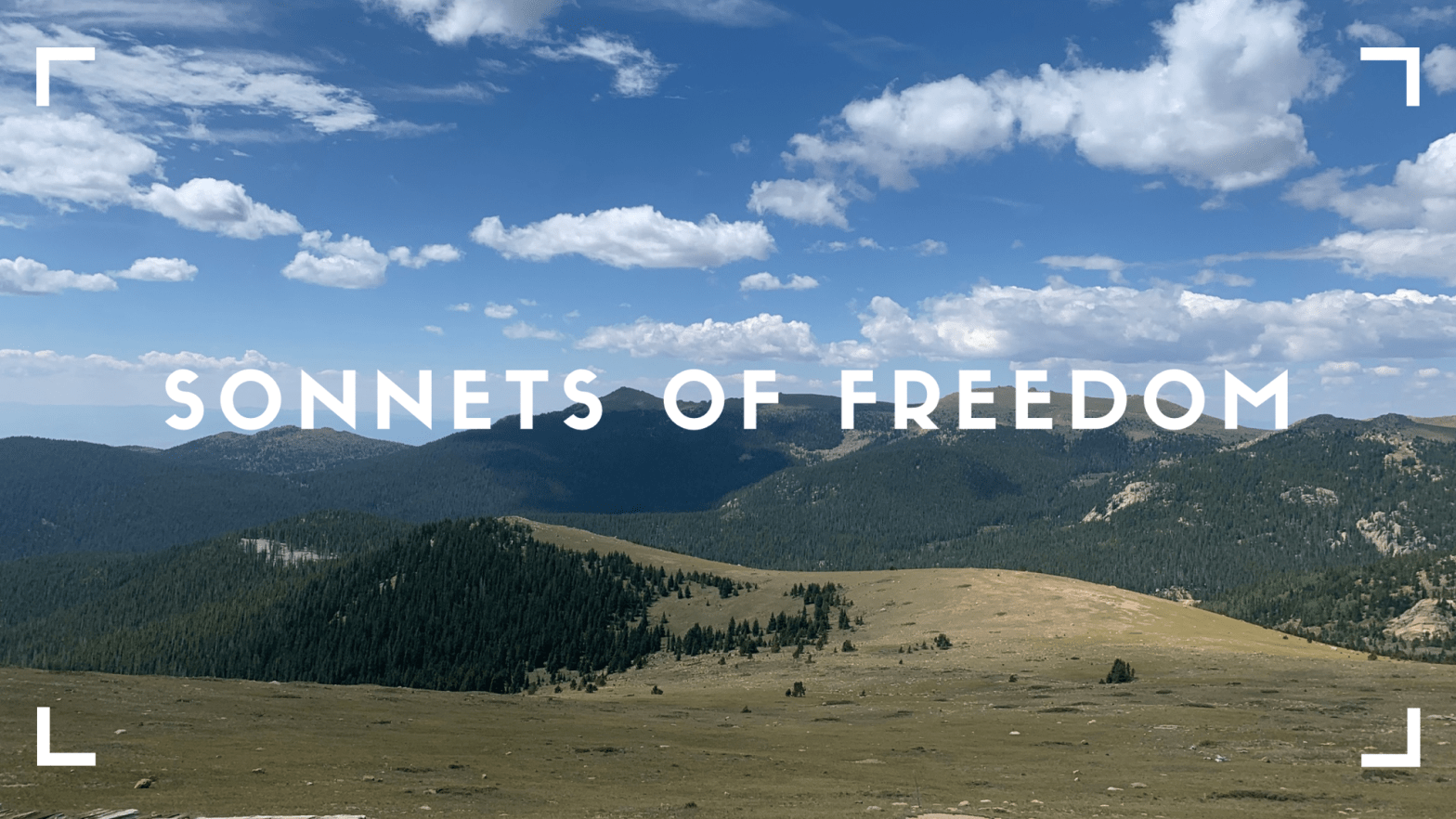
A few months ago, my church did a series on the 10 Commandments, and for some reason, I thought it would be fun to set myself the challenge of writing 10 sonnets for each one. At the time, I was also going through a series on the Sermon on the Mount with the youth, and I was struck by some of the parallels of language and theme between Old and New Testament, particularly how Jesus expanded our understanding of the 10 Commandments. It seems we are forever going up to the mountains to hear the Word of God (the banner photo was taken at 14,115 feet at the top of Pikes Peak last summer). It took what feels like ages, and I learned that rhyming can be annoying, but I finally wrote all 10! I don’t love all of them and couldn’t judge whether or not they’re actually good sonnets, but sometimes in creativity you just have to finish the project, so here it is:

I.
Thou shalt have no other gods before me
This the first, this my covenant vow
With it an invitation to be free
And these do’s and do not’s can show you how
But in fear disguised as pride, you judged against
Bowing to another, you thought you bought
Love and crowns, selling your soul. Now unfenced
And forgetful, waging a war ill-wrought
The One versus beast, you’ve already lost
The cup never yours to drink, so I did
Prime Mover moved by prayers, I paid the cost
Treasured one, your life in my hands is hid
Let go of your wide-eyed plurality
Turn to me wholly, source of purity
II.
Thou shalt not make idols or images
Of power beyond knowing or holding
If in symbol a mind envisages
A new god contained in human moulding
The creator becomes enslaved in worship
Unsaved by money, things, or devices
And lost in material membership
Finding no such thing as harmless vices
Look not to your own hands for salvation
But to bloody hands spread wide, pierced by nails
We’ll see the world’s final abdication
In light of God’s jealous love, everything pales
Would-be idolater, image divine
Indwells from the moment he called you ‘Mine’
III.
Thou shalt not take the Lord God’s name in vain
You mortal couldn’t seize it if you tried
Its not for use in the public domain
Yet you drop it around, honor denied
Using it as a fabricated brand
To curse or bless, get-out-of-jail-free card
But I AM. Too real to understand
Yet gifted and revealed to you to guard
All mercy and compassion richly bears
In me, co-inheritor, light-keeper
Once you see no other power compares
Calling upon it won’t make it cheaper
Know me not by magic incantation
Hear my deep love in Word’s incarnation
IV.
Remember my Sabbath, and keep it whole
Pause your unending drone, you worker bee
Trust me in your full repose to console
Not only for the day did I decree
It was made for you, ever-producing
People who don’t believe I could do more
Counter-intuitively reducing
Clock-in time. Can’t you see what you’re made for?
The wood between the worlds invites you
So linger amidst the trees, dance, play, shout
Time is ever present, enjoy the view
The gift for those who pressed on despite doubt
Nothing is wasted, not even nothing
Look to the horizon, rest is coming
V.
Child, honor thy father and thy mother
Love them for loving you with discipline
The family you’ve built with one another
Will tell your storied past if you listen
Remember their sacrifices unseen
From sleepless nights spent soothing childhood fears
To riding the ups and downs of a teen
Imperfect love carried you through the years
Though generations have passed on their pain
Forgive all you can, be healed of the past
Sins of the father need not be your chain
For the love of our Father is steadfast
All who come child-like are precious in his sight
Living their given name, his joy and delight
VI.
Thou shalt not murder, or let anger rule
Even resentful thoughts count as the deed
In your heart you killed the one you called fool
Hatred grows quickly when planted as seed
Violence done in secret cuts from within
More deadly than weapons of stone or knife
Are dividing words that injure to win
The one who destroys the peace takes a life
Rather, turn the cheek, see what could begin
When you at last surrender the self-war
Let down the shield wall, reach out and embrace
The friend who was an enemy before
For your life was purchased with grace upon grace
For you the lamb went silent to slaughter
And death was defeated on the altar
VII.
Love, thou shalt not commit adultery
Was not I, not Eros, your first lover?
But you fell to Cupid’s bow utterly
Shamefully shadowed under cover
Painted scarlet letter burns on your breast
Searching in your songs and poems, until
I found you in a brothel dispossessed
Though unfaithful you’ve been, I will fulfill
Hosea’s promise to his shining bride
At last unveiled, adorned in white, she waits
Til we all have faces we cannot hide
What was destroyed by lust, love recreates
By the beautifying gaze of the rose
Sealed in fidelity, love’s laughter grows
VIII.
Thou shalt not steal what does not belong to thee
What you have not earned or been freely gifted
Everything comes with a cost, nothing’s free
Though thieves find purses easily lifted
Rob a man blind, blind justice delivers
To each his due, despite system-cheating
Reward goes to the generous givers
Refusing to love a world competing
For scraps that divide the rich and the poor
Those ruled by the insatiable god Greed
Give up all they have, always wanting more
Til the only thing left to own is need
Let go of possessions and be possessed
Poor in spirit by the kingdom are blessed
IX.
Thou shalt not bear thy neighbor false, nor seek
To slander, deceive, or curse another
Tall tales, little whites, betray thou art weak
Projecting personas cost you a brother
Rewrite your past in riddles, but danger:
From fear one cannot wise counsel derive
Those oft-spinning their web lose their wager
Let it unwind, my child, come hear your shrive
Remember your name, remember you’re mine
To thine own self be true, only if you
Remove your plank, see reality shine
Be swayed by the power of love, let it woo
Away from the father of lies, back to light
Illumination brings all things to right
X.
Thou shalt not covet what’s not thine, Steward
Even the wanting, lusting, I despise
If your wandering gaze leads you wayward
You’re better off gouging out your own eyes
Winter, spring, and summer of discontent
Endlessly tightens its noose, and we swing
Between have and have not and supplement
But the promise is yours for the asking
Lilies are clothed and birds eat without fields
Your Father knows and gives with abandon
Come and see what enoughness your trusting yields
Keep your eyes forward, come open-handed
The kingdom is given to the righteous
Who long for eternal and turn from dust

If you’re interested in the sermon series, it’s all online on the St Aldate’s Youtube. I was also heavily inspired by Joy Davidman’s (wife of CS Lewis) Smoke on the Mountain.

I Can’t Stop Thinking About Hadestown

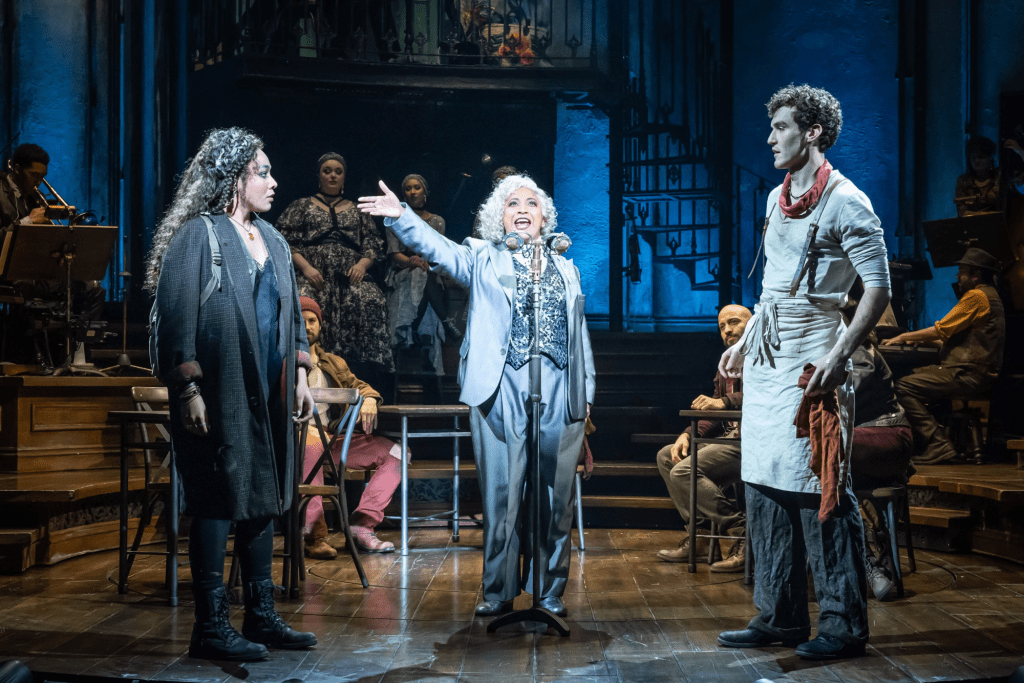
If I could be an effective evangelist for something secondary to the good news of Jesus, it would be Hadestown. I find it difficult to describe the show in a way that makes people who aren’t lovers of Greek mythology or musical theater want to experience it, but I truly believe it is beautiful and everyone should get to experience it. Hadestown is a captivating show, made beautiful by its genius lyrics, symmetrical music, and heartbreakingly hopeful characters. I loved listening to the album, and I’ve watched plenty of YouTube performances of the main songs (plus a bootlegged video of the original cast…), but nothing compared to seeing it in person.

Quick explanation of Hadestown: it’s a musical about two Greek myths, Orpheus and Eurydice, and Hades and Persephone. Two tragic love stories. Hades is god of the Underworld and everything under the earth, including gold, silver, and the dead. He falls in love with Persephone, daughter of Demeter goddess of the harvest and fertility. Depending on the story, Persephone is sometimes portrayed as seduced by Hades and sometimes equally in love, but in any case, he convinces her to be his queen and come down with him to the Underworld. However, she misses the upper world, the sun, and all living things though, and it misses her in return, so they make a deal that she can live in the sun for half of the year and with Hades for the other half. This creates seasons; when Persephone is traveling up, spring comes and prepares for her arrival, then the world rejoices in the summer sun. Then the harvest comes and things begin to die as she leaves, and the world waits in winter for her to come back and renew the cycle.

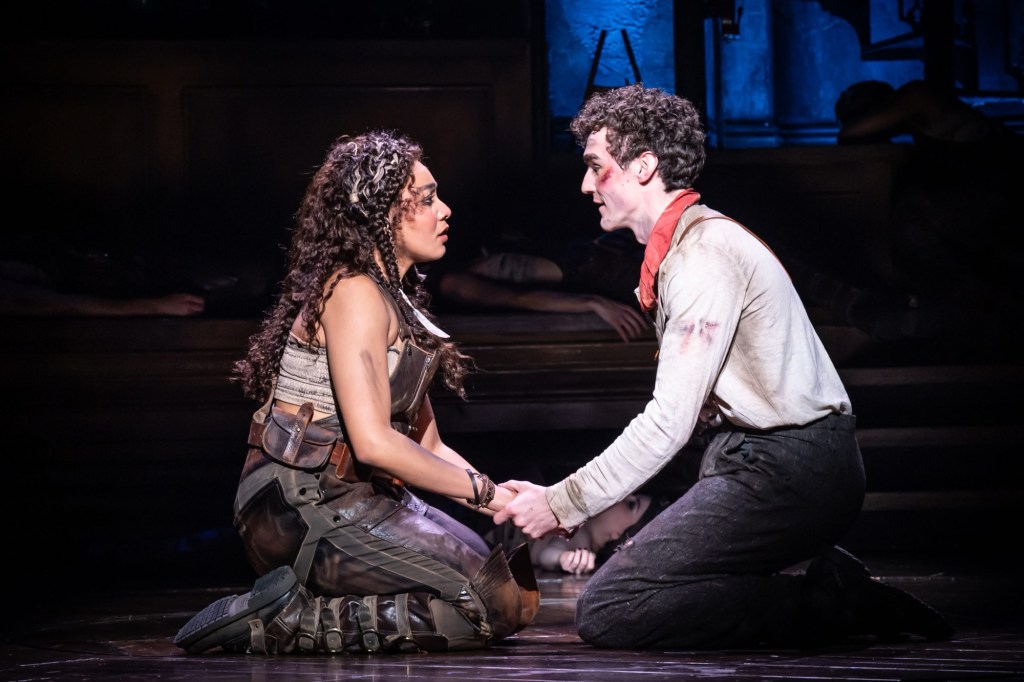
Our other couple is Orpheus and Eurydice. Eurydice dies (bitten by a snake in the original myth) and is taken to the Underworld. Orpheus, a poet and singer, journeys to the Underworld to get her back, finding his way through his song. When he finds her, he sings a song of his love so beautiful, it convinces Hades to let her go. But, he doesn’t make it easy. They have to walk out again, Orpheus in front and Eurydice behind. If he turns back to make sure she is with him, she will be taken back and he will have to wander between the world and the Underworld forever. He was meant to trust in his love, but it’s a tragedy, so right before they get to the sunlit land, he turns back, and she is lost to him forever.

In the story of Hadestown, the love stories are paralleled, and Orpheus’s song not only convinces Hades of Orpheus’s love for Eurydice, but also makes him fall back in love with Persephone. Part of the conflict of Hadestown is that the world is not right because Hades and Persephone have forgotten their love. Hades is jealous of Persephone’s time in the sun, so keeps her longer and makes the winter longer. Persephone resents her time with the dead and drowns her frustration in a river of wine, there’s no more spring or fall, and even summer is miserable because it’s too hot. Orpheus sees this and takes it upon himself to save the world by beauty, which he does, but sadly dooms his own love in the process.

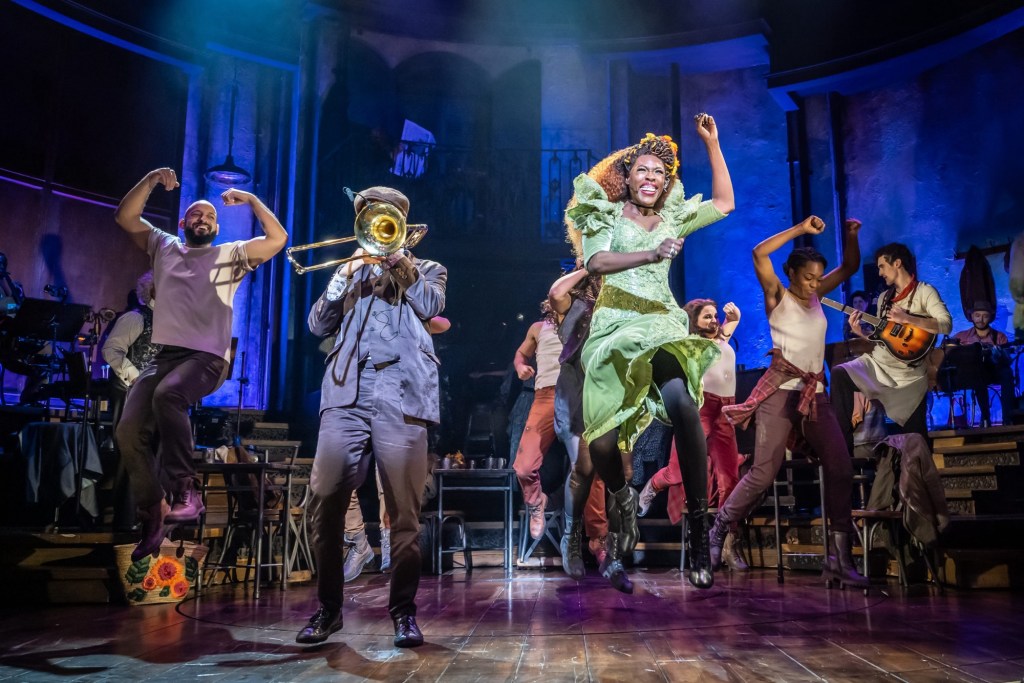
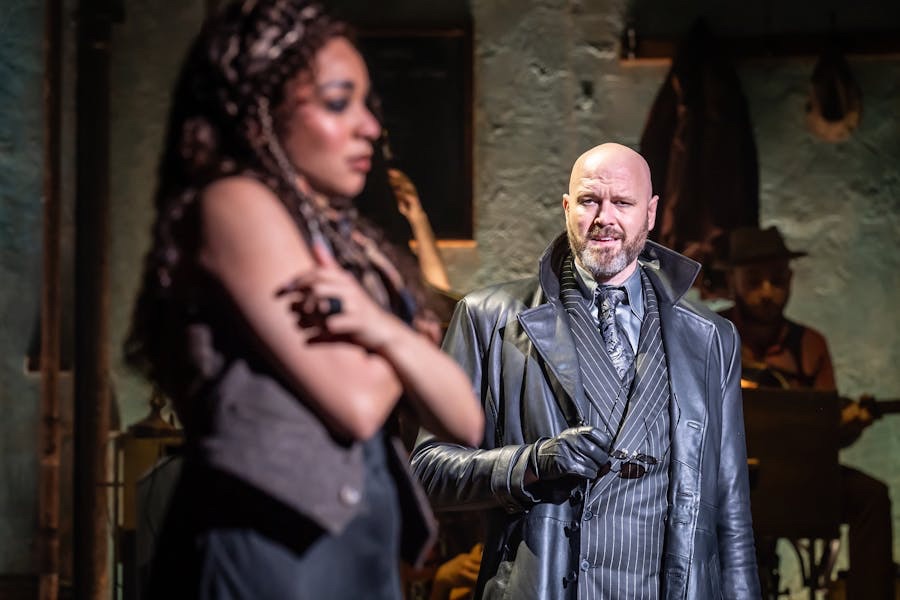
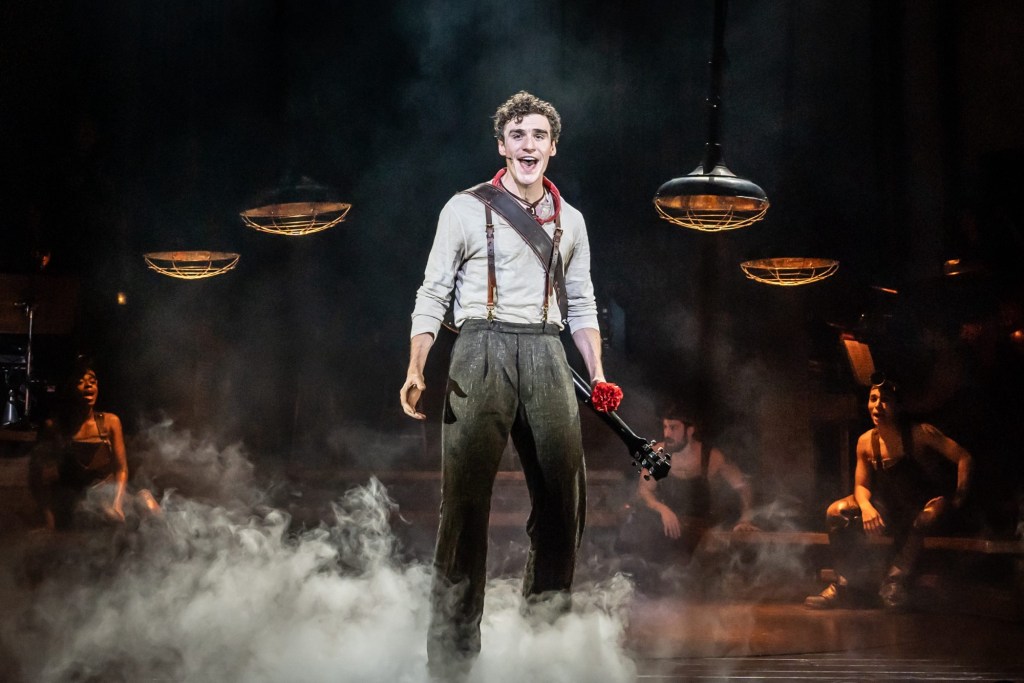
Lest you hear Greek myth and think of togas, columns, and lyres, the show is set in an ambiguous time and place, and the music is a folksy jazz style. It’s Depression-era inspired, but Eurydice has that grunge look of the 90s/00s, Hermes (the storyteller) wears a clean cut sharp silver suit that would look at home in the 50s/60s. Hades wears a pinstriped suit of a railroad tycoon in the 20s/30s, and Persephone’s dress might be mistaken for that of a 40s club singer or Dolly Parton. The Chorus would look at home a hipster Portland coffee shop/brewery. From the beginning trombone notes, your feet are tapping and your head is bobbing as you’re invited into the rustic bar scene. When Orpheus brings out his electric guitar, you’re swept away by the romance and yearning that calls you home, the feeling both familiar and strange. Then, when the stage expands as Hades and Persephone descend back to the Underworld, you’re almost blinded by the unnatural brightness and feel the pounding of the syncopated industrial beat in “Chant”.

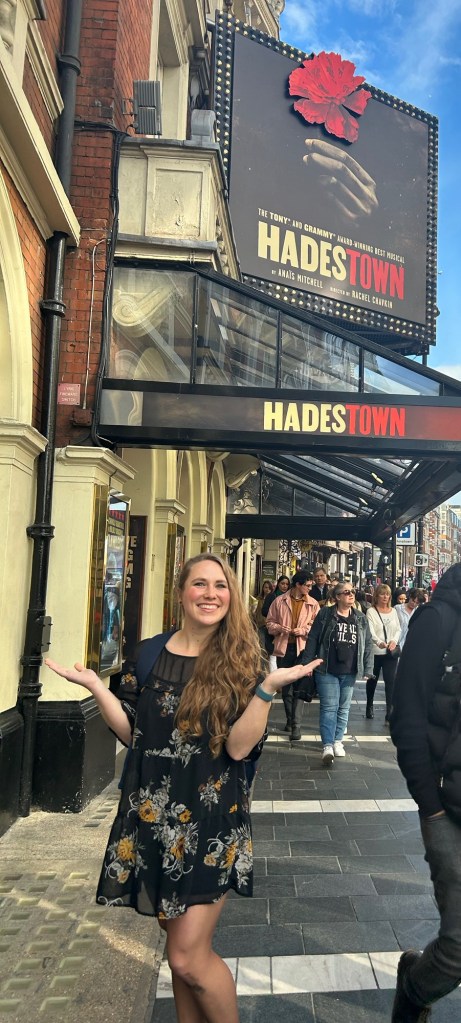
In some ways, it’s such a simple story with simple sets and costumes, but as the turntables of the stage go round and round and the themes and melodies repeat themselves in your mind, its depth and beauty draws you in. Seeing it in London was especially fun because the voices of the actors, though different to what my ear was used to from the original cast recording, sang out in their own accents and tone, adding to the idea that the time and place setting is unimportant to story. It’s outside of time and place, so we are fully drawn outside of our own time and place into the world of Hadestown, but the boundaries are permeable. When the curtain falls, we land back in our own world, but when we are invited to raise our cup at the end, we know they will sing it again and again (literally, 8 times a week). “Goodnight brothers, goodnight,” the haunting last words of the show, is an acknowledgment that the sun will rise again, and with it, the start of the old song. Days, seasons, years turn back on themselves with comforting invariability. If I could afford to see it over and over again, I would. Even so, it will live on in my memory.

However, that doesn’t mean everything will stay the same. The world is as it is, but the poets and lovers open up our vision to see the world as it could be, when it is in love.

One question repeats itself as I left the theatre: Why does Orpheus turn around?

If he was so in love with Eurydice, enough to journey to the Underworld and walk almost all the way back out, why turn around at the very last moment? The whole story, he never doubts her love. She pushes him away at first, falling in love “in spite of herself,” but he is always there gently pursuing her and drawing her into his safe embrace. My theory: he turns because he doubts his own ability to sing the world back into right turning. It’s self-doubt.

In “Doubt Comes In”, he doesn’t ask himself, is she there, (the fates ask where is she); he asks “Who am I to think that she would follow me into the cold and dark again?” and “Why would he let me win, why would he let her go?” Is this a trap or a trick? It echoes his original question in “All I’ve Ever Known” from Act 1, “Who am I that I should get to hold you?” The only reason he was able to convince Hades to let her go was his song, which reminded Hades of his love and softened his heart towards mercy, so Orpheus doubts that his song was enough, that it was a trick all along, that he does not belong there. Writing the song was the reason he lost Eurydice in the first place; Orpheus was so engrossed in the song did not hear her cry out to him nor see her fear of the approaching storm and their lack of shelter. Eurydice’s bravery to walk the long road was never in doubt for him. He said himself he held the whole world when he held her in his arms, but can he actually hold the world? Can he shelter her and make a home for the wanderer always swept up in the changing wind?

Clearly, self-doubt blinds and binds us more than distrust in others. It makes us think we are alone, but if we listened to the voice of those we love, we would know, “you are not alone, I am right behind you, and I have been all along.” The dark will not last, and the sun will rise again. All we have to do is keep walking, keep trusting, keep loving.

If the love stories are parallel, could the same be true for Hades and Persephone? Hades might be the end product of Orpheus and Eurydice, if they were gods. Hades doubts that Persephone will come back to him so his work to impress her and fill the gap she leaves consumes him. He knows his kingdom is nothing compared to the world of summer and sun and harvest, so the only thing that could bring Persephone back is love of him. It pushes her away though, and she is repulsed by his Electric City because she knows, despite his assurance that he created it for the love of her, he has created it for himself. She doesn’t want a power grid, bright and unnatural as a carnival, she wants the sun, and he missed it because he is blinded. They are stuck in the cycle, rotating further and further apart from each other.

Thankfully, Hades and Persephone, and the rest of the world, are saved most unexpectedly by a poet. The circle corrects itself, but at the cost of the poet’s love. Tragic. And we sing it over and over again, hoping this time he’ll reach the sun and lead Eurydice into the light. Of course he doesn’t, but its written so well that as the music swells and the stage spins, you really do believe they’re going to make it.

But… I do believe there is a hopeful moment, leading us to hope that maybe the song, the internal one being sung by players as opposed to the meta-story, will change at the end. The Fates can be proven wrong. After the weeping and the silence, the stage is reset, and all the characters come back on stage in their original costumes. And, as Hermes sings, Orpheus the bartender and Eurydice the wanderer catch each other’s eyes in their own spotlights, both as if meeting for the first time (“and I don’t even know you yet”) and as long lost lovers (“as if I knew you all along”). They’re ready to start the song over from the beginning, literally for the next performance in a couple hours if you’re catching the matinee, but I think this brief moment is also to give the audience and players hope that the story continues. Maybe they find each other again, in the same way that Persephone and Hades get to start over. In a lovely parallel moment, as Persephone heads back to the world on top, she asks Hades to wait for her, who promises “I will.” Maybe Eurydice doesn’t forget Orpheus or herself like she did at first, maybe the vision of the better world and his song will carry him on. Maybe his song changed things, and even if they are apart for a time, she will wait for him, and he will find her again. Maybe they can still keep to their promises and walk home together.

It’s an old song, it’s a sad song. But we’re gonna sing it again and again. And when it’s finished and when we sing it, spring will come again.

Last Days of January

It’s almost too easy to find beauty in Advent, the weeks leading up to Christmas. The incarnation itself is pure poetry, and if you’re not into profundity, the nostalgia of the season gives us the excuse we need to indulge, celebrate, and enjoy. Maybe the original purpose of Advent is forever lost to us amidst the trappings of Christmas that have given it a new meaning, but maybe it can be reclaimed in January, what has become the real season of waiting and groaning.

We all experience those January blues. Winter has outlived its cozy charm, and though the days are short, it feels like the longest month, just one to get through until February, which for some reason we all think will be better. And we all have our own ways of getting through it. Last year my strategy was to stay as busy as possible hit up the gym 4-5 times a week to get those lovely endorphins since being outside was less than pleasant. Not a bad coping mechanism, but as I’ve been leaning into the practice of living with the natural seasons, I’ve wondered if perhaps January holds something for us that we are in danger of missing if we’re too focused on not focusing on the present moment. The silence and the darkness might speak. So I tried to listen to January, and wrote this poem called “For All the Gloves I Lost” (because I seem to lose 2-3 pairs every year) or “Maybe January Isn’t So Bad After All”


Distant windchimes and dry creaking branches
The muted song of the season
Autumn’s dying beauty has come
To its full death
The chill in the air
Paints every inhale sharp
To lungs who long to drink
Full sun again
For now only sipping
On hazy rations of light

But the sting is most keenly felt
In my fingers, thirsty and bloodless
As naked and exposed as the trees
Without their canopy
They lament the loss of their protection
And wonder where
The single glove lies lost
Somewhere in a muddy puddle,
Never to be reunited with its pair
The only fit palm that could hold
Winter’s grief
And I feel a tremble underneath
My shivering hand,
Not in fear though
More like the shuddering breath
Of a sleeping giant
The gentle rest and fall
Betraying a secret

Maybe the world has died
But it is not dying

It remembered something
I, in the Grey Town, forgot
There is a turning, turning,
Of all things
Even so in the hard-packed soil
And green-less landscape
Frosty doubt cannot stand to
Hope in hiding

If you learn to still, you’ll hear it
The compassion of winter
Whispers, wait,
All is not as it seems
Beneath the surface and ken,
Slumbering life conceives of life
Green shoots will break free
Buds will burst forth fragrant and full
The sun will remember
To cast its loving gaze upon the earth
When the lion shakes his mane

But all in their time.

In our time, we are invited
To listen
And inhale the inner voice
Informing our deepest being.
Look unafraid there.
Now free to let the shadows be
Instead of excommunicating them
With our clumsy efforts
Frantic that no holy mystery
Should linger in the corners of our minds
What if we leave them to dance
With the flickering flame of candles
Or move freely over the land
With the clouds pushed by the wild wind,
Unbothered by our unknowing
Content in quiet awe?

So by all means, make yourself as cozy as possible with the rest this winter. Eat good food, watch that film you’ve been wanting to watch, make a new friend and have them over for dinner, read an old favorite book, go for a walk and come back to a mug of hot chocolate, take up a new hobby, dream about your summer holiday. But in between the comfy pursuits, can I exhort you to stop and listen to Winter?

Delighted Denial

Last month, I participated in a 10-day fast with my church to pray and seek God’s will for the year ahead. I’ve never really fasted before, apart from one or two other times, fasting for 24 hours, so I wasn’t sure what to expect from an extended fast. I chose to fast from lunch for 10 days, so I ate breakfast (with my morning cup of coffee) and did not eat until dinner. When possible, I broke my day’s fast with others.

I’ll be honest, it mostly felt terrible physically. The hunger was fine and I didn’t find myself only thinking about food as I thought, but the fatigue was the worst part for me. I wasn’t as mentally sharp, and it also meant I had to give up time in the gym because I didn’t have the fuel to sustain the intense workouts I normally love. It messed with my normal digestion, and I had a hard time listening to my body to figure out what it needs when I could eat, something I don’t usually struggle to do. I have a good relationship with food and love cooking, so it was odd to feel so out of sync with my body for so long.

As for the spiritual side, I didn’t sense any obvious change or shift. I wasn’t very disciplined to use the time I would normally prepare and eat lunch to pray, and instead just carried on working. I didn’t have any great revelation or encounter with God, other than to be thankful that we are not called to fast forever. Even so, I was comforted by the fact that fasting is a prayer of the body, and spiritual disciplines take practice. Life following Jesus is more often conversations walking on a dusty road than transfigurations on mountain tops.

Anyway, I wrote a poem about it. The word ‘fast’ is rich etymologically, so I enjoyed bringing in some of that richness and depth. There’s also plenty of Lewis and Tolkien allusions (is anyone surprised), as I was particularly inspired by a book I just read, Tolkien’s Faith: A Spiritual Biography by Holly Ordway, and even a sneaky allusion to McCarthy’s The Road.

Delighted Denial

When the world is at my fingertips,
Why deprive?
In steadfastly holding out
Grace teaches me to hold on and hold fast,
Fastened to the constant anchor
Not dominated by the will to survive
In the flesh
But by one much greater and better

And this grace finally gives permission
To notice
What rises to the surface
When easy fast filling
Can’t keep it stuffed and buried.
Then like dried grass
It blows away
In a warm, gentle breath,
Released from its prison.

So let my body’s prayer
Correct incurvatus in se
No longer bent inward
As a fetus to its cord
Now grown strong and straight
As the mighty oak and sprawling aspen
Roots drinking deeply from the waters of life
I bend only a knee
To cup water from this stream
As the lion says,
There is no other,
You must drink here.

And quenched, I take by word-of-mouth
Waybread for the journey
Shared with my fellow pilgrim,
The one great thing to love on earth
We carry on to the golden halls,
Our invitation to the feast
Burning in our breast pockets
Feeling the groaning in our stomachs
Press us on, with the Presence
To follow the flame
Into the wilderness

And somehow this emptiness
Fuels a song from deep within
Because we will not be outdone by
These stones that would not become bread
Soon the bridegroom will move
To embrace his bride
Finally shining and real as diamonds
And we will laugh and dance and cry
At the sudden turn where
All things come together
The sting of hunger
Once tunneling our vision
Now unremembered

But until then,
My waiting is a prayer
My denial is a remembrance
My longing is my hope
His steadfast love, my food.

*just to note, Tolkien was devoutly Catholic and believed in the Real Presence of the Eucharist, or the doctrine of transubstantiation. I don’t hold to this, but I wanted to allude to part of the etymology of ‘fast’ that means close by or near (I was thinking of the traditional lyrics to Away in a Manger are: “fast by me forever/And love me I pray” but I can’t actually find any lyrics that say ‘fast by’ instead of ‘close by’ so maybe I’m making that up)

Compatibility

This is a poem about dating apps. Yes, I tried a few for a while, and yes, the experience was as terrible as you would think. Maybe I think about everything too deeply, but I think there’s a lot to be said about the mass of emotions attached to dating apps: from making a profile, scrolling through, trying to get a conversation going, maybe going on a date or two, to (if you’re like me) deciding when it’s time to throw in the towel completely and delete the damn thing. There’s also a million questions wrapped up in the experience, the ones we want answers to, the ones we’re forced to ask but would rather avoid. So I wrote a poem.

If you are still persevering on a dating app, no judgement from me. That would be so hypocritical, considering I may or may not have gone on a YouTube dating show… Carry on and may you find the person of your dreams. I don’t think the apps are inherently bad, and many of my friends have had positive experiences and even met partners on them, but they have definitely contributed to the dumpster fire that is our current dating culture. I hope this poem captures at least some of the experience and helps uncover what we’re really looking for. I also hope it makes you laugh.

The title is still working itself out, but I’m just calling it ‘Compatibility’ for now. Also the banner pic has nothing to do with it, I just thought the sunflowers were pretty.

You’re invited
To the lonely hearts club meeting
In this digital space, we have
What you’re looking for
True love? Why not!
The answer to all your questions
Or a fling, stringless and risk-less
Just curate your perfect self
Into 6 pictures
Convince us you’re worth knowing

But type carefully,
one wrong move,
You’ll be swiped
Ex’d
Forgotten as quickly and thoroughly
As any other passerby

I’ll take that deal,
So cautiously I’m
Hopeful to start
Downloading and downgrading
My expectations

But hope faded, and jaded
I tapped no on
Another blurry profile pic
Another gym selfie
Another cropped photo
From his friends wedding

I flip through this
IKEA catalogue of potentials
Wondering why I am supposed
To care so deeply
About pineapple on pizza
And wracking my brain
To come up with a clever,
Thoughtful, funny, honest
Aloof but interested,
Doesn’t-take-myself-too-seriously
Response to
hey

What do you really think you’ll pick up with that line,
You self-fancied Shakespeare?
I haven’t fallen for you,
I’ve only tripped over your cliché
Soon I’m convinced
If there’s a diamond in this rough mine,
I’ll awaken a Balrog before finding him

Conversation starters strike a match
That burns out in an instant
Disillusionment settles in
To boredom
It becomes a game
To fuel my addiction to novelty

I came looking for my fairytale
My prince, my champion
But all I found is
More ghosts than
Disney’s Haunted Mansion
Yet spell-bound by possibility,
The scroll continues

I see now we’re really playing at
The exchange of power
Passing with judgement back and forth
With every tap the ball switches court
Though in my head I’m holding mine
Suitors presenting themselves
At my pleasure,
Here love’s labour is truly lost
The beauty of the faithful pursuit
Supplanted by the convenience
Of jumping ship at leisure
Before anything can really begin,
And I find as I lower the scepter
None of us can win

Because in this database of loneliness
Every message left on read
Leaves an unanswered question
Rejection always personal
Despite distance from a profile

We’re all just Bumbling through, trying to find
The Hinge at which
The Tinderbox springs open
But instead we’re just rubbing Salt
Into the wound
When the stars of the Coffee and Bagel
Get crossed

We were so desperate for
The beginning of our stories
We created all this space
To be noticed
Now we’ve put ourselves out there
We discover
The very thing we’ve feared
More than being alone
To be seen
And to be found wanting
Not wanted

Is this the new romance of the rose,
Throwing hearts into the void
Barely daring to hope they might come back?
Masqueraded chance encounters
Replaced with manufactured meet-cutes
All of our complex, beautiful, rich,
deep, creative selves
Reduced to reports on
Foods we enjoy or music we listen to

As if the most common connection
Could be the inception
Of a strong foundation
A match made to perfection.
Is it too late to change the direction
Of this ill-fated narration?
Must all our satisfaction
Be found in this hazy reflection
Of the truest of loves?

What if there’s an invitation to
Something more
Accepted by deleting
Freeing my focus
From this singlemindedness
To be wholly recollected

The Bright Shadow: Christ in the Land of Faërie

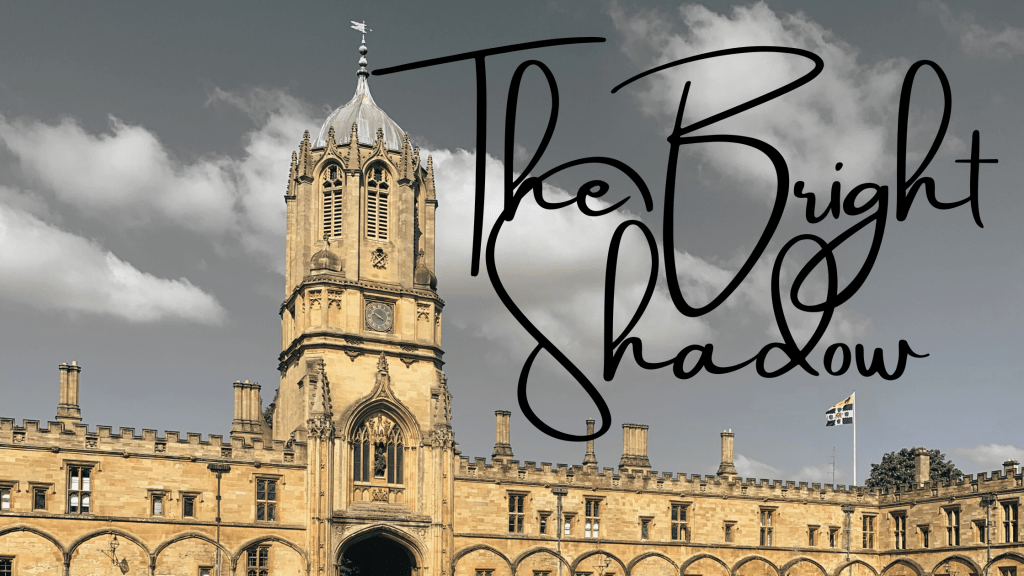
I had the privilege of sharing some of my thoughts on the importance and power of storytelling at a small conference of children, family, and youth workers this week. I mostly said yes just for the lunch in the Christ Church college dining hall (the famous inspiration for the Hogwarts dining hall), but also I’ll take any excuse to talk about why I love fairytales and fantasy. The conference was called “The Wow, the Why, and the How of Storytelling” and included practice on writing stories and Godly play, and a tour of the cathedral through the eyes of a medieval pilgrim. My short talk was very well-received, to my pleasant surprise (hard to remember your ideas are cool when you’ve spent so much time with them), so I thought I would share it here. It’s basically pieces of the storytelling sections of my dissertation, so nothing new, but it’s a good summary of the really fun part and leaves out the less universally appealing methodology and philosophy.


I grew up immersed in books and stories. I know the transformational power of books, especially fantasy, because I was transformed by the experience of entering another world through reading. Although asking me to pick my favorite book is an impossible question to answer, I can confidently say none captured me as fully, or made me long so deeply for the feeling of something else as The Chronicles of Narnia and The Lord of the Rings. These stories of the fantastic and magical “baptised my imagination,” to use Lewis’s words, and invited me to enter a world suspended in time, returning me to my reality with fresh vision and wonder. I know now that what I experienced was a taste for the radiance of transcendental Beauty, the communication of God’s infinite Glory, and at the end of my journey, I found that I saw Beauty in other experiences in my familiar world.

I believe stories, specifically fairytales and fantasy, have the power to transform our imaginations by their invitation into another world. If we have the courage to say yes to the dangerous business of going outside of our doors, despite not knowing where our feet might be swept off to, we might discover the re-enchantment of Beautiful Life. And we might discover the Beautiful Life lies not so far away after all.

We feel the cadence and rhythm of a narrative arc through its plot and particular setting. Literature’s poesis, its subcreative power, makes new characters, worlds, and cultures that reveal a new vision for our own self, world, and culture, and we are indirectly formed by its invitation to inhabit the world of the story, or empathise with a character. This especially applies to stories with settings very different to our own, and characters very unlike ourselves. The greater the distance, the more need for empathy. In engaging with literature, we see both ourselves in the reflection of the window, and the world to which the window opens. Lewis writes, “in reading great literature I become a thousand men and yet remain myself. Like the night sky in the Greek poem, I see with a myriad eyes, but it is still I who see. Here, as in worship, in love, in moral action, and in knowing, I transcend myself; and am never more myself than when I do.” (Experiment in Criticism, 141) When we read, we are exposed to the transcendent experience of another world with its stories and people, yet paradoxically we discover more of ourselves through the experience.

Imagination and the Christ Myth

Imagination is the light by which we see what is already there, though we had not seen it before. The Christian faith claims that what is already there, the possible within the actual, is the life of the kingdom revealed by the embodied parable of Jesus. He is the root-metaphor for the kingdom, and the form of Beauty. The incarnation means our apprehension of God is not only abstract; Christ made Beauty’s communication personal by becoming a person himself, giving us concrete forma so that we apprehend God in the incarnation and create beauty from our delight in him. In his incarnation, death, and resurrection, the theodrama of Christ’s movement, what Lewis and Tolkien called the Christ Myth, revealed the pattern of the Beautiful Life.

Tolkien found this pattern in the eucatastrophe of fairytales. ‘Eucatastrophe’ is Tolkien’s word for the Consolation of a happy ending in fairytales, while ‘Dycatastrophe’ is his word for sorrow and failure. According to Tolkien, from dycatastrophe comes eucatastrophe: defeat is not the final word in either fairytales or the story of our lives. Victory comes in a “sudden joyous ‘turn.’” Applied to spiritual formation, this guides us in understanding God’s presence as eucatastrophic movement in our lives as we imagine the world as it could be, beautifully sung according to the shape of his kingdom, which we know because of Christ’s communication of Beauty. We tell construct a narrative theology, which means we looks backwards to find meaning out of past experiences and uses the imagination to look forwards, envisioning how we might embody the Beautiful Life. Applied to youth ministry, we are guiding youth in the vital task of identity formation through the stories of their lives that answer the questions: “Who am I? Do I matter? And How do I relate to others?” We help them find the sudden joyous turn through the communication of Beauty.

But why fairytales?

Tolkien argues that the best fairy-stories are “plainly not primarily concerned with possibility, but with desirability. If they awakened desire, satisfying it while often whetting it unbearably, they succeeded.” We feel the rhythm of a well-told story, so that the head knowledge of Truth makes its way to the heart by way of beauty, and vice versa. Fairytales communicate beauty especially through their strange otherworldliness that still has enough echoes of familiarity. Our desire for Beauty is awakened when they include the 4 elements of Fantasy, Recovery, Escapism, and Consolation. (“On Fairy Stories” 10) Fantasy is Tolkien’s reappropriation of Imagination and fancy conceived as a virtue. (OFS 10) In fairy-stories, fantasy has an “arresting strangeness,” yet it is familiar enough because it is made from the real Truth and Beauty we already know. (OFS 48) Fantasy provides Recovery, or a regained health and vision that sees things not as they are, but “‘as we are (or were) meant to see them’ – as things apart from ourselves.” (OFS 58) This newfound vision sees how the luminous things of Faërie are luminous, or glorified in the familiar world, what Lewis called in his autobiography ‘a bright shadow’ (see Surprised by Joy) coming out of the story and resting on his vision of his world.

Lewis only experienced this because of Escapism, which Tolkien defends saying, “Why should a man be scorned, if, finding himself in prison, he tries to get out and go home?…The world outside has not become less real because the prisoner cannot see it.” (OFS 60) We need Escapism to imagine the kingdom of God and to hope in the Consolation of the Happy Ending, the last and most important gift of fairy-stories. In the happy ending, “when the sudden ‘turn’ comes we get a piercing glimpse of joy, and heart’s desire, that for a moment passes outside of the frame, rends indeed the very web of the story, and lets a gleam come through.” (OFS 70) Our stories do not have an end while we live them, and though we may fear the unknown of potential tragedy, Christian imagination consoles us with hope in the happy ending, beyond the story known in the present. Tolkien also writes that the happy ending “does not deny the existence of dycatastrophe, of sorrow and failure: the possibility of these is necessary to the joy of deliverance; it denies (in the face of much evidence, if you will) universal final defeat and in so far is evangelium, giving a fleeting glimpse of Joy, Joy beyond the walls of the world, poignant as grief.” (OFS) If the Gospel is a fairy-story, the escape from death is only through death, and the consolation of the happy ending we long for comes in the new state of Creation.

Tolkien’s essay defending fairy stories concludes with the astonishing fact that the gospel, the evangelium, is the greatest fairy-story told, with the greatest eucatastrophe erupting from the greatest dycatastrophe. The story pauses on the cross, beholding it for a breathless moment, but it does not stop there. The resurrection, and its invitation for us to follow Christ into death and life again, casts the cross in a new light, a bright shadow. This is the Christ Myth, and it bleeds into all the best stories. Redemption, reconciliation, restoration, new life, surprising joy, perseverance, hope in the midst of despair, faith in the darkness, love that conquers: all these tell God’s story.

The Christ Myth

The Christ Myth echoes in our own lives when we sub-create by telling our own stories in the light of eucatastrophe’s hope. If faith is a journey, struggles and hardships are only the middle of the story, and though these moments of tragedy are indeed difficult, the drama of the Christ Myth means that Christ is both present in the suffering and promises future consolation. In the theodrama of the incarnation, suffering is not forgotten after Consolation, but remade into Beauty through the love of Christ. The stories that we tell of our lives are Christ’s, including our suffering, pain, and trials, and any beauty found in our stories is the Beauty he has written in.

We need not wait until the final happy ending to see and live this Beautiful life, however. In the midst of tragedy, we are comforted both by the future hope of Consolation and by Christ’s present identification with our suffering. By the patterns of the Christ Myth, our escape from death is through death with Christ, so that “All tales may come true; and yet, at the last, redeemed, they may be as like and as unlike the forms that we give them as Man, finally redeemed, will be like and unlike the fallen that we know.” (OFS 73)


I ended the talk with a reading from The Return of the King, but here was the culminating quote of the passage, from when Sam and Frodo have escaped from Cirith Ungol and are about to cross the plains of Mordor and climb Mount Doom:

“Far above the Ethel Duáth in the West the night-sky was still dim and pale. There, peeping among the cloud-wrack above a dark tor high up in the mountains, Sam saw a white star twinkle for a while. The beauty of it smote his heart, as he looked up out of a forsaken land, and hope returned to him. For like a shaft, clear and cold, the thought pierced him that in the end the Shadow was only a small and passing thing: there was light and high beauty for ever beyond its reach… He crawled back into the brambles and laid himself by Frodo’s side, and putting away all fear he cast himself into a deep untroubled sleep.”