Apples of Gold

Reflections on Speaking Wisely According to Proverbs

Proverbs says, “a word fitly spoken is like apples of gold in a setting of silver” (25.11). What a goal to work toward for those who value wisdom communicated through words! As I continue to hone my teaching and writing skills, I fantasize about changing lives through my words. What a joy to watch someone experience that “aha” moment, where the light turns on and suddenly the world looks different, knowing it was because I said the right thing at the right time! Like apples of gold in a setting of silver. 

In order to have this impact, words must come from wisdom, the main topic of Proverbs. In all aspects of our lives, we strive to be in the “wise” category, those who fear the Lord and find life, or who live rightly towards a good end. Wisdom is contrasted by the fools who walk steadily toward their own destruction. One way to become wise is to speak rightly because words are more valuable and powerful than we know, and we know our hearts by the words that come from it.

Another Proverbs teaches, “The mouth of the righteous is a fountain of life, but the mouth of the wicked conceals violence” (10.11). The wicked, or the Fools, are always on the defensive with their words. Out of fear, they speak in slander, in deceit. There is an attack behind what they say because pride and malice rule in their hearts, and the power behind their words is a destructive one. In juxtaposition is the words of the righteous, or the Wise, whose words contain the power of life. Because “the wise” is synonymous with “the humble” in Proverbs, they have no need for self-defensiveness. The truth is not a threat to the wise, so they speak it without fear. They are ruled by love and peace, and from this fountain flow words of life. 

This does not mean the wise never rebuke. Proverbs exhorts all to accept discipline because discipline guides away from the house of Folly and to the welcoming house of Wisdom. Though they are painful to the fool, the firm words of discipline are life itself. They mend and build up. As Proverbs instructs, “Rash words are like sword thrusts, but the tongue of the wise brings healing” (12.18). The wicked cut down with their speech, but the wise builds up for the sake of the other person. Only the fool talks just to hear himself, enticing others into his foolishness, but the wise know that each word should be an intentional choice, rich with meaning and love. 

Too often we toss around words like they are nothing more than sounds the tongue strings together. We think they need to fill time because silence is too oppressive, and before we know it, the space between us is cluttered with ugly adornments and unintended pain because of a badly placed word. Words do not float around like a feather in the wind; they fly straight to the heart and cut deep. Since our way of pursuing wisdom and even our way of life inherently involves the constant exchange of words, consider: Is your speech the rash, fearful words of the fool? Or the lifegiving, valuable words of the wise? Either way, it holds power.

So let us offer words to one another as a lover leaves a note for his beloved. Let us consider and keep watch over ourselves so that instead of putting up defenses like the prideful fools, we invite others to drink deeply from the well of life like the humble wise. Let us live well with the end in mind: true kingdom living. Let us choose words carefully, lavishing truth on others. Let us practice the hospitality of Wisdom, opening wide our arms with speech that communicates love with each sound formed, for “Gracious words are like a honeycomb, sweetness to the soul and health to the body” (16.24).

Fonder and Prouder than Ever

Recently, I revisited one of my favorite stories because I wanted to read the book again before finally watching the movie. I remember listening to this story through Focus on the Family’s Radio theater version, and I was even in a short play of it. It’s the story of four sisters, each trying to be good and love each other through life’s highs and lows. I think any girl who grew up familiar with the story found a piece of themselves in one or two of the main girls of, you guessed it, Little Women.

Why has this story cherished by so many for so long? Why are we still making and watching movie adaptations of it? I think the answer to that question lies in the timelessness of its themes and the relatability of its characters. Not one of the sisters is perfect; Louisa May Alcott, the original writer of the book, made sure to include faults in each of the sisters, and even in the supporting characters, and how those faults significantly affects their relationships. Alcott doesn’t hold back in her critique of her characters, making sure the reader hears a moral lesson. In doing so, I think that readers experience a freedom to make mistakes, as long as we grow from them. The sisters are simply real, and their pursuit of virtue and morality is as flawed and holds as many self-imposed trials as Christian’s in Pilgrim’s Progress, the book that they often reference. Because of this, we as readers cheer for them when they succeed, when they are a little bit better than they were before, because we want to be better. The faults of the characters are endearing because we want to believe we can be loved despite our own faults. That is enticing enough in and of itself.

Perhaps another reason why this book has held up all this time is the picture of familial life it gives. Maybe it is a bit idyllic and unrealistic, but the scenes of a home full of laughter that welcomes all who wish to enter is appealing. The March home is chaotic and messy, and they can’t afford much, but it is a happy home. Marmee makes sure to instill the value of open hands in each of her girls, and they give what they have willingly. In fact, the book starts with the girls giving their breakfast to a family that had nothing. One of my favorite scenes is when Laurie, the next-door neighbor boy who is starved for companionship and feminine care, finds himself suddenly a part of the family. His quiet, solitary life is suddenly full of love, laughter, and creativity. The March family is not without their squabbles and challenges, but they put in the work to forgive, love, and help each other. This picture is compelling to any reader because we are made to be in families, and we are made to welcome others into the family. Those who had good family experiences growing up find themselves nostalgic for the fond memories that shaped their childhood. Those who cannot relate to the good family memories can take comfort and hope from what could family life could be because the neighborliness that permeates the book proves that one does not have to be related to find comforts of family and home.

Many have said this book is ahead of its time, which is the last reason that it is so beloved. I think that is true, and the movie certainly drew its dramatic interpretation from a feminist agenda. Alcott herself identified most with Jo and remained unmarried throughout her life. Like Jo, Alcott wrote “sensation stories” and attributed her ambition to “boyishness.” While many fans of Jo might love her speech towards the end of the movie about how girls can be fit for more than love because they too have souls and minds, I was more drawn to Meg’s line right before she gets married. She says to Jo, who is reluctant to let her sister go, “Just because my dreams are not the same as yours doesn’t mean they’re unimportant.” I think most women wanted Jo’s message to be the main message of this movie: women don’t have to get married in the end to be significant, and ambition isn’t only for the boys. Those are true and important messages, but I also think Meg’s line is just as important. Jo’s ambition is her charm and her fault, and it is a turning point in her character development to see domestic bliss as a worthy ambition. 

I will always love Jo and be inspired by her unfettered passion. I will always laugh at Amy, knowing I’m more like her than I would like to admit. Beth is too unrelatable for me to enjoy as a character, but I recognize that her sweet goodness and its absence are vital to the motivations of all of the family. I didn’t like Meg all that much until I heard that line, but I think I needed to hear it just as much as Jo. Meg has just as much soul and mind as Jo, and her desire to create a lovely little home out of her corner of the earth is as important as Jo’s determination to publish something worthy of reading. Both women learn to love better for the striving, and I that’s why I love about Little Women, and why I think it will continue to speak to girls, boys, women, and men for a long time.

P. S. If you didn’t recognize the reference in the title, maybe this will help you out: “these hard days need not be wasted. I know they will be loving children to you, do their duty faithfully, fight their enemies bravely and conquer themselves so beautifully, that when I come back to them I may be fonder and prouder than ever of my little women.”

Embracing Eight

I’ve been told that 8’s are hard to love. An 8 has all the qualities of a confrontational leader that, in its unhealthy state, callously steamrolls other people and is totally out of touch with emotions. 8’s are stereotypically power-hungry, angry, and closed off from vulnerability. These qualities are difficult to swallow in women, and especially unforgivable in Christian women. What is an 8 to do if all she wants to do is honor God and the way he made her?

Say what you will about the enneagram (yes, I know it has secular origins), but over the past year or so, I’ve found it to be a very helpful tool in understanding myself. Acknowledging that I am an 8 helped me to name destructive tendencies in my life that came from places of fear so that I can let God redeem the beautiful parts of my personality. 


Hallmarks of an 8

8’s are defined by power and intensity. When you talk to an 8, you can feel her power behind her words, and most 8’s are very aware of the power they hold. They crave genuineness and can see right through false flattery. Because of this, an 8 often come across as aloof if she perceives that you are not worth the energy it takes to be in relationship with her. If an 8 has shown any vulnerability toward you, you are a part of a very small circle because you have proven that you can be trusted; you make her feel safe. Be careful about breaking her trust because broken trust is not easily forgiven or forgotten by an 8. If you want to love her well, match her intensity. Don’t be afraid of conflict; if you back down for even a moment, she will see it and you risk losing the relationship, or at least its depth. 8’s thrive on conflict. They see it as a chance to move forward in the relationship, to test its mettle. They do not settle for mediocrity but chase greatness, and they do things the hard way just to prove they can. They fear being out of control or being controlled and will hold tight to their power. They operate under extremes, and they are always willing to fight to the last stand for what they believe in. You can tell when an 8 walks into a room by the inherent confidence she carries with her wherever she goes.

All of the qualities of the 8, just like the qualities of any enneagram number can be found in a healthy or unhealthy 8. The reason most people cringe when I say that I am an 8 have usually come up against the hard, unstoppable force of an unhealthy 8, and some parts of the 8 personality also directly contradict the stereotypical “ideal Christian woman.” However, most people have no concept of what I can do as a healthy 8. I see my personality as a gift because I get things done. I have confidence to take charge of a situation that needs direction. When I commit to doing something, you can guarantee that I will finish it with excellence. My relationships have been deep and meaningful because I cut through the small talk, speak truth when it is needed, and expose intense vulnerability to my small circle of trust. I’ve found contentment in letting go of people who are fake, and I don’t have a problem holding fast to my boundaries. As a woman in ministry, I need to have a certain amount of confidence and leadership ability in order for people to take me seriously, allowing me to advocate for those in my ministry. I would not have made my voice heard at tables where it needed to be heard, or even had a seat at the table, if I was passive or faltered.

This is all only possible by the grace of God. When I started on this “journey of self-discovery,” if you will, he showed me so much of my own darkness, and I was confronted with the times where my 8 tendencies came from a place of fear. I have hurt people because I did not care to listen to them in my own drive to carry out what I knew was right, and I closed myself off from healing when I cut people out who hurt me. I have to consciously remember to be empathetic in certain situations; otherwise I easily forget to take into account the feelings of others. I keep high expectations of other people because I keep high expectations for myself, and often get angry or disappointed if those expectations are not met. Gentleness does not come naturally to me, so I must pray that God would produce that particular fruit and ask for grace when I steamroll others. Where I get into trouble is when I walk into a room thinking I need to prove myself, and my challenges come from a place of self-doubt or fear of being underestimated.


Redefining Strength

Where I have found the most redemption in the destructive parts of my personality is in redefining what strength looks like. Paul writes that in his weakness, Christ’s strength comes through. If I truly believe that, and if I recollect my identity in Christ, then I am free to “take the boxing gloves off’ because the reality is that I have nothing to prove to anyone. My strength is actually in my vulnerability. Leadership becomes about serving others instead of maintaining control. 

In relationship, I am learning to leave room for humanity. In other words, God is teaching me to give grace to others in the same way that I need grace. I can set a high bar and help others get there, instead of cutting them off if they don’t, and I can speak the truth with love (emphasis on love), instead of using the truth as a blunt weapon.

Of course, I am still a work in progress, and I learn more and more about myself every day. I can still tend towards using aggression or intimidation to get what I want, consciously or unconsciously. I struggle to let God have the steering wheel in my life and find peace when things get out of my control. People still tell me I’m intimidating, and I wrestle to figure out if it is more honoring to God to change my demeanor to accommodate or to continue as I am and recognize that as their issue. On one hand, why would I want to be in relationship with people who are so easily intimidated, and shouldn’t I live out of the natural confidence I’ve been gifted, but on the other, do I need to become more demure so that I can put off an approachable and kind air? Am I not called to a certain submission as a woman of God, and yet did he not also empower me to boldly speak out against falsehood and injustice? Does he not command me to be still and let him fight my battles, and yet are there not times when it is time to take up the armor and fight the good fight? I can only pray for guidance and discernment as I am confronted with situations that challenge what I know to be true, and repent when I don’t love others well.


I don’t pretend to be an expert on the enneagram, and I think that if you get too deep into it, you can get lost and take on untrue things about yourself just because someone else decided that’s what your number does. I also try to avoid typing other people based on their actions. In the minimal research I’ve done, I don’t identify with all of the typical qualities of an 8, and I’ve met many 8’s who are vastly different than me. However, it has been a very good tool to give voice to underlying desires and fears, and it has helped me love who God created me to be. Learning about other types helps me to love others well, so I would recommend having a basic knowledge of the types. This leaves room for the broad spectrum within each of the types while also providing a foundation for knowing the other person and how he or she operates.

If you want to know more about the enneagram and your type, here’s some resources that were helpful to me. There’s probably a ton of places you can go, but these helped my understanding:

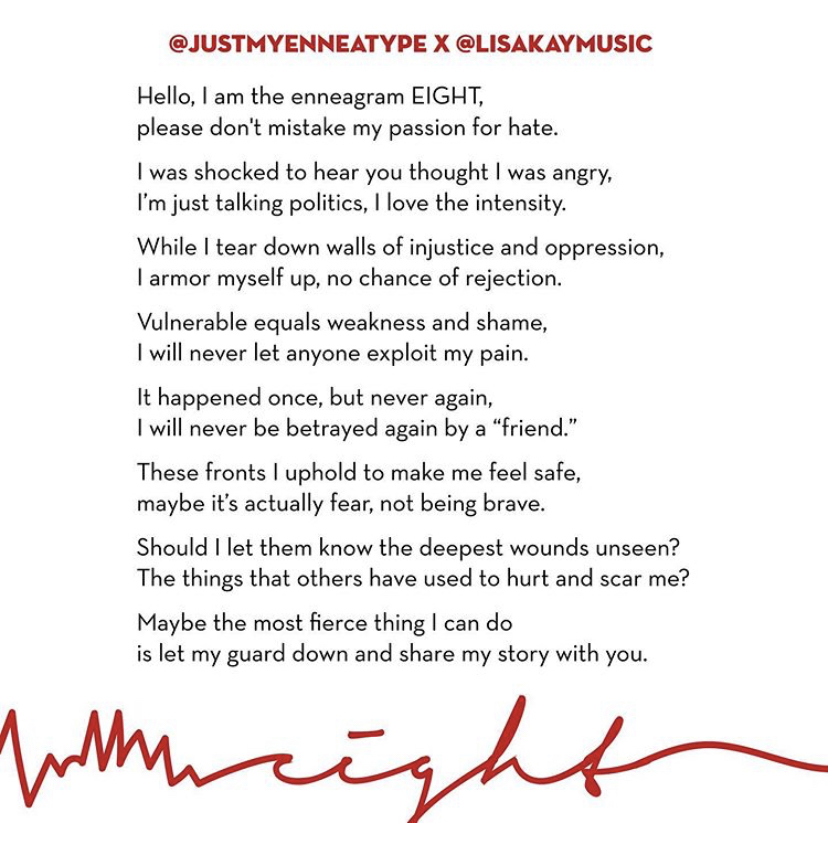
  • @justmyenneatype Instagram
  • The Road Back to You by Ian Morgan Cron and Suzanne Stabile (I’ve only read the 8 section out of this book)
  • Sleeping at Last enneagram songs and podcasts
  • That Sounds Fun Enneasummer podcasts

In the meantime, here’s a Pinterest quote that I think summarizes my 8ness well:

Calm her chaos,
but never
silence
her storm
Sovereign in the Storm

So much has changed since the last time that I sat down to write a blog post. I put off writing for so long because it is hard to think profound thoughts in the middle of a global pandemic, and I figured everyone was as tired of reading about Corona and quarantine as much as I am. Everyone’s lives are affected in so many ways, and the past months have been defined by disappointment and trying to find new normals. Everyone predicts what will happen, trying to update each other on the latest information, but in reality, no one knows. It’s an attempt to gain control in an uncontrollable situation.

I keep thinking about Ahab, from Moby Dick. He is daunted by the vastness of the whale, of the cosmos, and of God, that he tries to defeat it all in stubborn, ignorant pride. He could stand on a boat in the middle of the sea and still call himself God. His whole journey is about giving meaning to his suffering, but in the end, he was just a man killed by a whale. To what extent are we in the same boat (haha)? Do we stand in the middle of a crisis, self-deceived into thinking we can be gods? Shouldn’t we be looking around us and fall to our knees in worship of the one who is actually sovereign? This crisis should tell us just how small and defenseless we are, and just how big and powerful God is.

I’m reminded of another scene in a boat. 13 men, a storm all around threatening their lives. One of them sleeps. How could anyone sleep at a time like this? Perhaps it is because he did not fear the storm. He is not ruled by fear because he is the Prince of Peace. The other men do not understand, and wake him, saying “Save us! We are about to be drowned!” This man rises and says only “Peace! Be still!”

“Where is your faith,” he asks. “Do you not know that the Lord of Hosts is with you? Have you not been commanded to be still and know that I am God? Where were you when the foundations of the world were laid?”

And they marveled at him.

One more boat scene: another storm, but this time Jesus is not in the boat. He walks on the water, and one man decides to follow. In faith, he steps out and walks on the water with his eyes on Jesus. It is only when he turns to look at the storm that he starts to sink, but again, it only takes “save me!” for Jesus to reach out his hand. The wind and waves have nothing compared to the one who sits at the right hand of God.

I hold onto the peace that allowed Jesus to sleep in the boat. I hold fast to my faith and my hope because I know how big God is and how small I am. I have seen his power that calms the storm, and I see that I cannot be a god. I worship him by being obedient, faithfully doing the work set before me each day. Of course, there are still times when I get distracted by the storm, and the fear hits me like a wave trying to pull me under. I still feel the disappointment for things lost and yearn for things I can’t have, but those pass when I look upon the face of my savior. There’s not much else we can do, but thankfully, we aren’t asked to do anything else.

Lost and Found

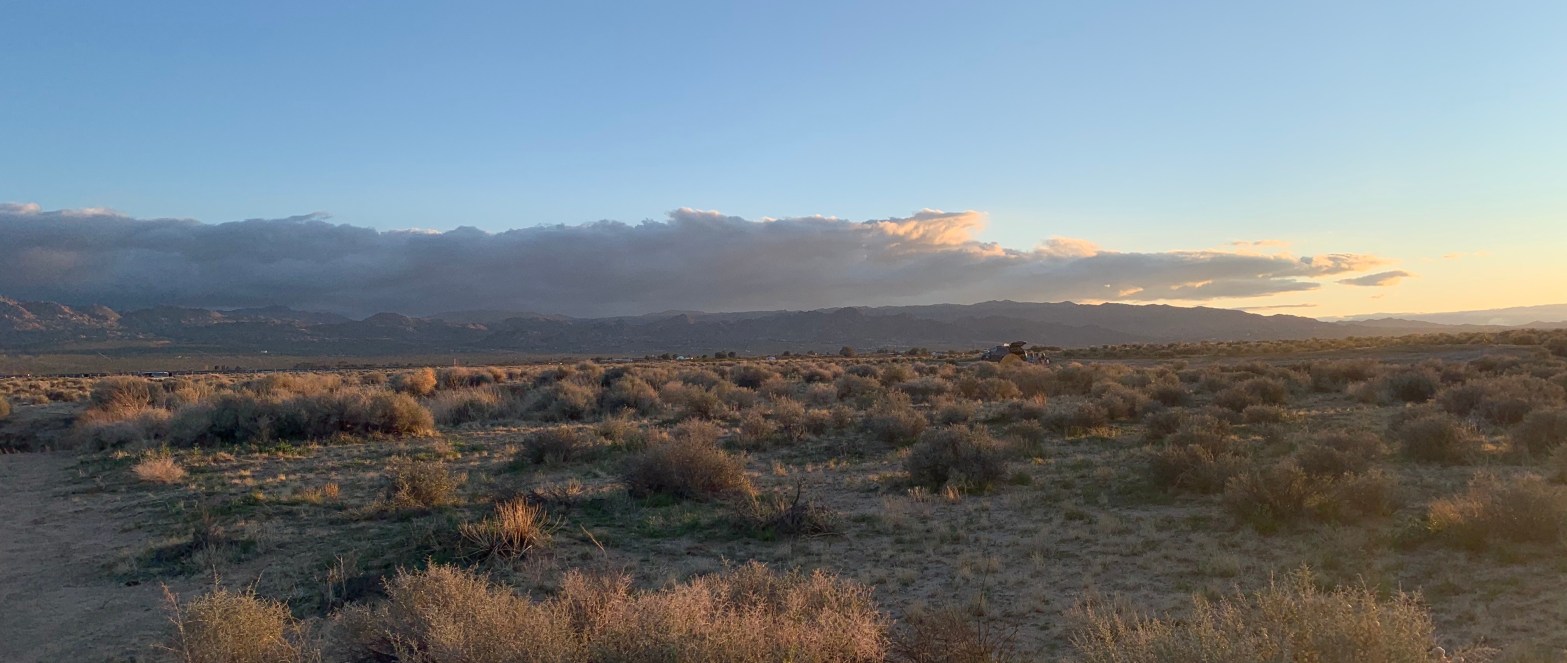
A Poem for Joshua Tree

I never thought the desert could be beautiful 

Its dryness denotes lifelessness
Its vastness creates loneliness
It is hostile by its very nature
Reproduction only possible by hard-earned survival
Life is a perpetual fight here

I thought God could only speak from a mountain top
Why descend from there at all, only to enter into 
This expanse of dust

We were made for the lush green garden!
And yet, a voice calls out in the wilderness

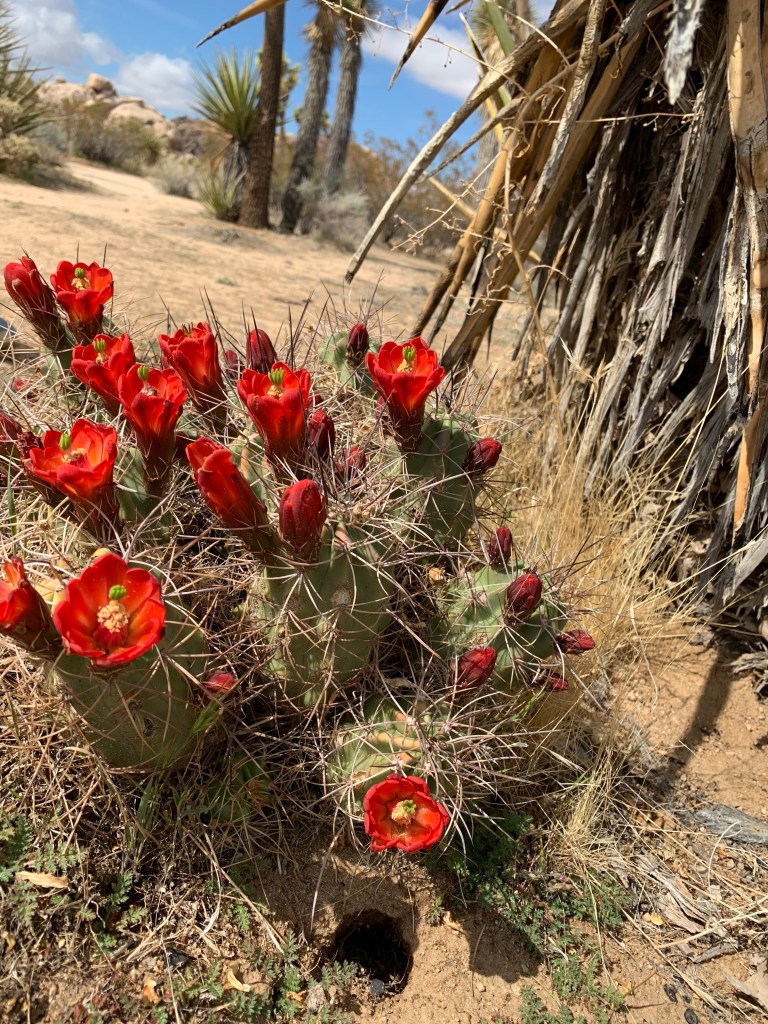
There is goodness here, if you know where to look
Life flourishes for those who have eyes to see and ears to hear
A flower begins to bloom, defying the spines that surround it
A bird sings from a brittle branch 
A rock, carefully and patiently formed, presents itself
Because if my heart ceases to worship, 
This hard and sharp thing in my hand
Will cry out its praise

So I willingly come into the wilderness
To meet myself 
(Who I was, who I'm meant to be)
Expecting to suffer like everything around me
And draw strength from without
For I found beauty here
Made more glorious in desolation

Found

Strength and Dignity

Happy International Women’s Day! (Did I already lose some readers? Don’t worry, I’m going to try not to be preachy or soap-boxey) Since this is a day to celebrate working women, I’d like to share my experience of working in field especially hard for women.

            First of all, please know that when I express thoughts like this, I don’t want it to come from a place of hurt, anger, or insecurity. The reason that the word “feminist” leaves a bad taste in so many people’s mouths is that most often, the loudest voices are the most hurt and are trying to cause the most hurt. It is not my intention to yell and point the finger; I only want to make my voice heard for the sake of unity within the kingdom of God.

            Being a woman in ministry means that I am often the only female at a table of men ministering to both men and women, or boys and girls. It means that I hear a lot (and I mean A LOT of jokes, supposedly made in love) about my culturally defined place. It means that I often question my calling and my gifts. It means that there are not many around me who are pursuing godly womanhood (because the majority are pursuing godly manhood). 

            On the flipside, being a woman in ministry also means that I get to be counted among a number of women who are boldly following and honoring God. It means that I get to have an important voice in advocating for those who would not be well-considered otherwise. It means I have the privilege of learning from and working with men who demonstrate Christ’s leadership. It means I get to raise up young men and women to spiritual maturity as they pursue godly manhood and womanhood.

            The path I have chosen (or that has been chosen for me, sometimes it is hard to tell) has not been easy, and it has been a sanctifying process. There have certainly been times when I have sat in a room of men, and I am shocked that their well-intentioned leadership has severely neglected the women of the ministry. Once I was sitting in at a meeting (the only female) of youth leaders planning a leadership conference for young adults, and I kid you not, they wanted to make one of the seminars about being a pastor’s wife. I wanted to shout, “do you realize what kind of message you’re sending to ALL of the women at this conference? You are telling them that their only place in church leadership is by being married to someone who will do all the leading for them!” There have been other meetings where I have given an idea that is passed over, and a man repeats it later, and it is accepted by all as a great idea. I, and I’m sure many other women in ministry, can tell many similar stories. My struggle in times like these is to determine when speaking out would come from a place of insecurity of being overlooked, and when speaking out is actually needed for the women who are not being considered.

            Again, I don’t want to point the finger of blame at men in leadership, nor do I want to chalk every struggle I’ve had in ministry to sexism; I simply want to draw attention to the fact that most men don’t realize when they are overlooking women. It is a blind spot for male leaders. They might not notice when the majority of their meetings don’t include women, but I can tell you that I always note when I am the only woman or among a small number of women. I can always tell when a man asks for my opinion or thoughts and moves without actually considering what I have to say, like he did his diligence to hear me but is going to do what he thinks is best anyway. I want men to understand how hard women have to work for a place at the table that should be freely open. Because that work (dare I say, fight) is so hard, I have had to act with a certain confidence that I don’t always feel. There is less room for error for me than for men. I won’t even talk about the word “submission” because there are so many layers to that word too often tossed around. Every situation requires a different response because my loving response has to change.

            This Women’s Day, I am thankful for the women who have gone before me in ministry, who have demonstrated the beauty of being female and who have worked with men to be leaders of God’s people. I am also thankful for the men who have affirmed my gifts and who have heard my voice, acting as servant leaders in the example of Christ. I am even thankful for the men who didn’t hear me because it forced me to talk to God about how to honor him better and strengthened my faith in who he called me to be. Most of all, I am thankful for my heavenly Father, who sees me and knows me intimately.

            Today, celebrate beauty and femininity. Praise the Creator who intentionally formed us to be female and who clothes us with strength and dignity. Thank the women who got you to where you are through their love, hard work, and humility. And finally, work towards unity and peace within the body of Christ by lifting each other up.

Lent: A Season of Turning and Setting

            As I sit in my living room, I watch the snow from yesterday drip off the trees, making that lovely pitter patter sound. The world that was so icy and cold yesterday is thawing, and the clouds that hung heavy over the hills broke to reveal a hazy blue sky. The sun casts sparkles on the droplets in the branches. I can’t help but think, “What a perfect representation of nature’s observance of Lent.”

            I don’t pretend to know much about Lent. Until very recently, my experience of it was that it was a time to give up sweets or social media, until inevitably people gave up or forgot about it, and then Easter rolls around. Easter was a nice reminder of Jesus’ resurrection, but it was mostly a random holiday in spring where everyone dressed extra nice in florals for church and makes an Easter egg hunt outside (unless of course you live in Colorado, in which case it probably snows). I enjoyed the specialness of responding “he is risen indeed!” in church, and the chocolate bunnies were a nice perk, but the significance of the day was lost on me. How could it not be? How could the warmth of spring have its true value without the contrast of winter’s cold?

            In my very minimal research on the history and purpose of Lent, I discovered that Lent, while not actually mentioned or taught in Scripture, is based off of Jesus’ 40 days in the desert wilderness. Since the Council of Nicaea, Lent has been a part of the Church calendar. It starts 40 days before Easter, and it is meant to be a time of mourning, repentance, and dwelling in a self-imposed desert before the joyous celebration of Easter. Sometime between 325 AD and now, the season was reduced to a period of denial in the interest of self-help and probably produces more self-righteousness than true humility and dependence on our savior.

             I first began to participate in a true experience of Lent through a Lent Advent devotional, created by Biola’s Center for Christianity and the Arts (I cannot recommend this devotional enough, and they also have an Advent one. Check out the link here). The creators of this devotional blend art, music, poetry, and Church tradition to guide people toward Lent’s original purpose. Through its variety of mediums and representations of beauty, I learned that Lent should be a season of turning. Of turning away from ourselves and towards God (in essence: repentance.) We should only be attentive to ourselves enough to identify what worldly or fleshly thing is keeping us from God, and then we need to pray for grace because it is not by our own power we turn towards God. If at any point, we are deceived into thinking “if I could only give up __, then I would be holy,” we are doing Lent wrong. I don’t think Lent can produce piousness, righteousness, or holiness because it is a human created thing (Man is not created for the Sabbath, but Sabbath for man, Mark 2:27). Only God can produce that in us, but we have the opportunity to join with Christians around the world in participating in one means of grace. 

            If Easter is a day for celebration, Lent is a season of mourning and suffering. I don’t mean that we should wear black or force ourselves to be sad, but there is some beauty and goodness to giving ourselves over to experiencing the true depravity of humanity. Lent reminds us of the evil of sin; it separates us from God, the source of all goodness and light. We dwell in the darkness of winter and death with no hope. We are responsible for bringing suffering into the world. If we move past that truth too quickly, it diminishes the sacrifice of Christ on the cross and the incredible gift of salvation. One of the most dangerous prayers we can offer is, “Lord, show me my sin,” because he will. But, thanks be to God, he will also show you himself and his redeeming power! How much easier will it be to turn from yourself and towards God when you have seen the evil within you! How much sweeter will the rising of the sun on that blessed Easter morning be when you have journeyed and suffered through the darkest of nights! 

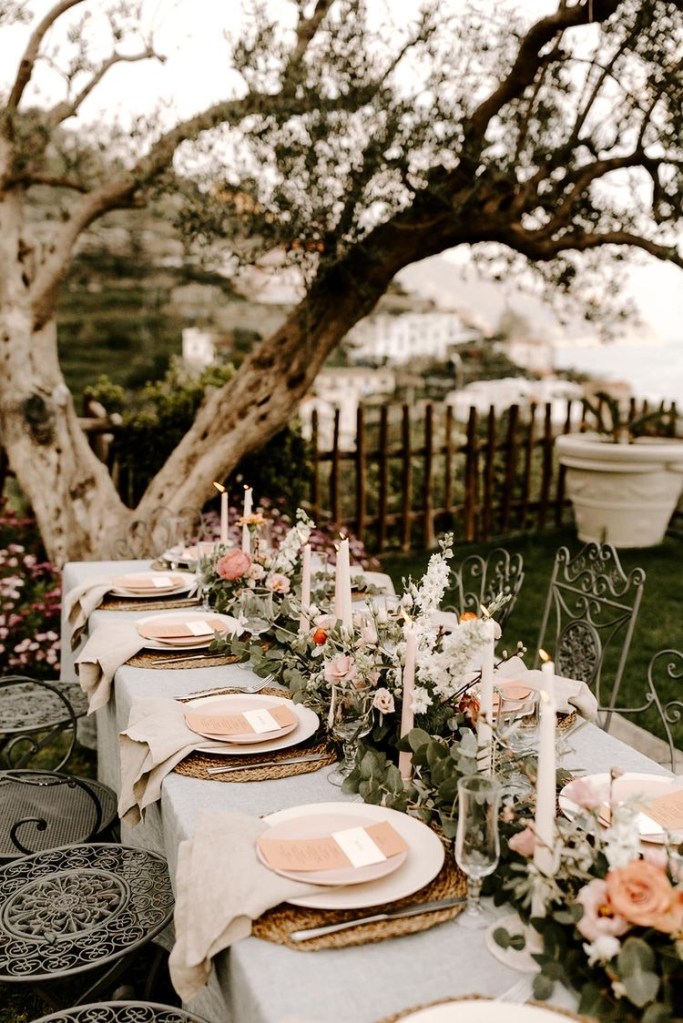
            Maybe you are thinking that Lent is too liturgically high or inaccessible for you. Well, another way I like to think about Lent is the setting of a table. The best of feasts has a table set lovingly and carefully with the best dishes, the most beautiful centerpieces. During Lent, you are setting a table in preparation for the feast to come, because Lent is a time of preparation for something good. You are hopeful for the table to be filled with a bounty of good food, but for now, it is empty. How are you setting the table for God to fill it? Lent should make you uncomfortable with the emptiness of the table and longing for it to be filled, knowing that you cannot fill it yourself. To take the metaphor further, are you inviting others to the feast? Lent is not meant to be a solitary activity but a communal experience that draws us together into the presence of God. How can we, as the Bride of Christ, learn from the turning of the seasons and prepare as one during our present winter for the feast of new life? 

Love Simply

Choosing to descend
And empty the self for one
Called worthy and seen
Occupying space
In the thoughts of another
So the self forgets
Way of the kingdom
To give, give, and give again
Eager to lay down
Greatest of these
It remains beyond feelings,
Endures past the end.

Recently I was challenged to write a haiku answering the question: what is your definition of love? Obviously, while 17 syllables cannot fully capture love, I enjoyed the practice of condensing this huge concept into one thought.

Hopefully, you’ll notice that these haikus touch on each of the four loves (eros, storge, phileo, and agape). Eros was the least acknowledged, and agape the most. That was slightly intentional because I don’t pretend to have much experience with eros, and because there’s too much “poetry” already on eros. That being said, I do think many people have reduced eros to “Disney love”, or romance portrayed in popular culture. To do so robs eros of its beauty and goodness. It is true that we must not be fully lead by eros (the Bible is full of warnings against carnal lust, and “follow your heart” is the worst advice ever written), but to write it off as evil is also a mistake. You would have to pretend the book of Song of Solomon and large parts of Proverbs don’t exist. Eros, like all the loves, has been twisted and perverted by fallen human nature. Only by God’s redeeming love can it be restored to its true beauty and rightful place within the kingdom of God.

I digress. What I wanted to convey in each of these haikus is that all the loves require the lover to forget the self in some way. The focus is always on another person. When love becomes turned inward to the self, that’s when love becomes perverted. Perverted love acts out of fear and neediness because it fears the shame that might come with intimacy and selfishly wants something in return. What is meant to be pouring out actually takes. (Coincidentally, this changes the conversation on self-love. Is self-care actually a thing in Scripture, or did we make that up so our sinful self-love is validated?) Some of the loves are natural, meaning that they don’t take much of our will to act on. Eros (romantic love), as C.S. Lewis writes in his book The Four Loves, is when another person invades the mind and reorients the lover completely to the beloved. Phileo and storge (friendship and affection) also happen naturally. 

 Another digression, the line between phileo and storge is hard for me to distinguish because my closest friendships would actually be categorized under affection. These are the friends who are more like family because we simply do life together. The comfort we take from being together, no matter what we’re doing, is the comfort of home. Phileo, at least according to Lewis, requires an outside focus, something you have in common. These don’t feel like friendships to me because they are shallower and easily came and go, and with their natural departure, not much love is lost. However, that seems to be the point of their nature, and they certainly lend themselves to a more companionable and pleasant life. And of course, friendships like that can just as easily settle into affection.

Agape love is the one love that is not natural because it is a complete emptying of the self. It is the kind of love that sends Jesus to the cross for his bride, that caused him to willingly submit to becoming human. It is a choice, the same choice that God made when he called Abram to be the father of nations, the choice that Ruth made to follow Naomi, that David made to bring the son of his fallen enemy to sit at his table, that Jesus made to sit with sinners and see the ones the world forgot. This love was the rod of discipline God used to punish the people who had forsaken his covenant (made in love), and it was the mercy God demonstrated by preserving a remnant of his people. We are created in God’s image because of agape. We are adopted as sons and daughters, called by the name of Christ, because of agape. Through agape, God knows us fully, and we do not feel shame because perfect love casts out fear, and we are fully ourselves. To give this love, a love that asks nothing in return because it cannot be returned, to others is kingdom living.

You want to know love? Know God. You want to know God? Go against your nature, take your mind off itself to contemplate a love you can never understand, and then fall on your knees in adoration and worship. You want to worship God? Empty yourself and choose to see others through agape love. You want to love others? Know love, and its source. And so, life in Christ becomes cyclical, yet ever growing further up and in. 

So here’s your challenge: what’s your definition of love? Write it in a haiku, three lines of 5 syllables, 7, then 5. (It’s not as easy as you would think!) You might even choose to write one on each of the four loves. If you want, leave it in the comments or send it to me; I’d love to read them! And if you want to know more about the four loves, read Lewis’ The Four Loves.

Roses and Stars

When I first applied to the Torrey Honors Institute, the Great Books honors program at my university, I answered in my application that my two favorite books were Brothers Karamazov and The Little Prince. While I did enjoy reading both of these for school, my sole motivation was to portray myself as intelligent and pretentious enough to get into a prestigious program, and I assumed that loving Russian novels and classic French children’s literature would do the trick (Knowing my 18 year old self, I probably made sure to include that I read Le Petit Prince in its original language). However, upon revisiting these two vastly different texts, I have found that they are actually part of the same conversation, and both develop idea that carry into many other texts in the Torrey curriculum and have shaped my own journey over the past 3 years. Perhaps I was onto something even back then.

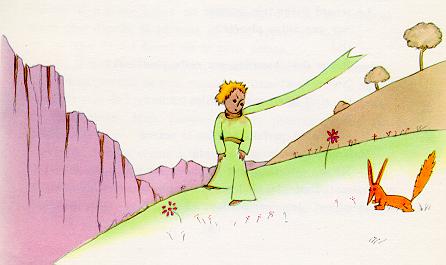
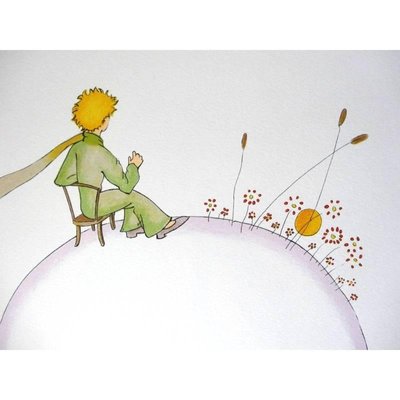
In The Little Prince, a boy finds himself far from home, learning about the way of the world from his innocent and curious point of view. On his journey, he finds that things are beautiful not because they are grand or magnificent, but because they are loved by him. He loves a rose, and though there are many roses, this particular one matters because she belongs to him. He also loves a fox, who wants to be tamed so that it may know the unique step of one boy among many. There is a touching moment when the fox says that he will cry when he sees the wheat because it is the same color as the prince’s hair, and in this, Antoine de Saint-Exupéry communicates the beauty in the sadness of parting. It is sad to leave something special, but it is beautiful to tame and be tamed for the sake of that moment when he sees the wheat.

A similar moment happens at the end of Brothers Karamazov, when Alyosha gives a speech to a group of adolescent boys mourning the death of their friend. It is good for them to cry and be sad about the injustice of his no longer being present, but it is also good to laugh and be glad. The memory of Ilyushechka can be a light that inspires the boys to be good and love with the active love of Jesus Christ. This active love does not seek answers to suffering; it simply brings joy and peace into the dark.

Alyosha could be a grown-up version of the little prince. He maintains a child-likeness that internalizes the sin and suffering of the world, only to become an outpouring of love and innocence. He invites the cynics, like his brother Ivan and the young Kolya, to fix the injustice of the world by entering into the painful places to find beauty there, and in doing so, relieve the pain of just one. Why should anyone eat pancakes at a funeral? For the same reason that the prince watches 44 sunsets in one day. Mourning can be lovely. The prince knows this, and he teaches his new friend, an airman who tells the story of the prince, to gaze at the stars to remind him of his rose and his home, saying “the stars are beautiful, because of a flower that we cannot see.” When the prince leaves, the stars become beautiful to the airman because of the prince that he cannot see. 

Both the prince and Alyosha can smile even as they weep because they find the beauty of things that die and pass away. They are beautiful and important, not in spite of their transience, but because of it. There could be any number of roses, any number of suffering boys, yet the absence of one is deeply felt: the rose who is “threatened with imminent disappearance.” And so we in our foolish humanity continue to tame things and letting ourselves be tamed for the sake of the beauty of transience. We let ourselves love ephemeral things, and we cherish reminders of what, or who, we’ve lost. We love people because they will not be with us forever. We watch the sunsets and celebrate the end of things, why? Because of the rose that is important to one boy. Because the sweetness of loving may not solve all the suffering in the world, but it eases the pain of one, and that is enough.

I would not cast anew the lot once cast,

Or launch a second ship for the one that sank,

Or drug with sweetness the bitterness I once drank,

Or break by feasting my perpetual fast,

I would not if I could, for much more dear

Is one remembrance than as a hundred joys

Christina Rossetti, They Desire a Better Country

Further Up and Further In

Some know these words as a CS Lewis quote from The Last Battle. Some people who know me well know these as the words I have incorporated in my second tattoo. I know these as the words that have defined my spiritual journey over the past couple years.

The concept first came to me during my sophomore year of college. I had been keeping an eye out for a meaningful image for another tattoo, since my first tattoo a year previous is only words. That semester, my curriculum included a lot of theology books new to me, along with Dante’s Divine Comedy. Something about the feeling of climbing upward towards God, journeying away from sin, darkness, and death into holiness, light, and life caught my attention. I knew that someday, I would get a mountain tattoo to remind me to always look upward, setting my mind on things above. Like Dante, I was on a journey, and I felt God calling me upward. Mountains also reminded me of Colorado and my roots, and I wanted to be reminded that my heavenly home is waiting for me while I find contentment and peace in this earthly home.

By what I assume can only be divine appointment, I had also recently read the Lewis’ The Last Battle, the final book in The Chronicles of Narnia series. I remember that when I read and listened to this book as a young child, it was my least favorite book. It scared me to enter into this final chapter of Narnia, and I hated the idea that the world ended. (On a related note, this is one of the reasons The Horse and his Boy is my favorite Narnia book: I love the idea that Narnia and the Golden Age of the Pevensies goes on, even if we don’t get to read about all of it.) Most of the book takes place at night, which gives a darker feel. It also made me sad to read about Susan’s fate (spoiler alert: her vanity makes her completely forget Narnia). This is why I was so surprised to learn, on coming back to The Last Battle, just how much I love this book. 

To give some context for this particular quote, a battle between the Calormens, dwarves and loyal Narnians has just taken place as the world is ending (hence the title). The Calormens believe they are killing the Narnians by forcing them through a stable door, on the other side of which lies the deadly god Tash. However, those who were faithful to Aslan, found themselves not in a dark stable, but in Aslan’s country, revived and youthful as kings and queens. The Pevensie children (minus Susan), Eustace, Jill, and even Diggory and Polly are all present. Aslan comes to greet them, and they watch him bring about the end of the Narnian world. Though they mourn for a time, Jewel the unicorn realizes first that the Narnia that just ended is only a shadow of the one they are now in.

It was the Unicorn who summed up what everyone was feeling. He stamped his right fore-hoof on the ground and neighed and then cried: “I have come home at last! This is my real country! I belong here. This is the land I have been looking for all my life, though I never knew it till now. The reason why we all loved the old Narnia is that it sometimes looked a little like this. Bree-hee-hee! Come further up, come further in!”

Jewel the Unicorn, The Last Battle

All the creatures and children run. They run with life like they never had before, and as they run, they find that the country is bigger and better than the Narnia they knew. It expands outward the farther they go, towards Aslan. Further up and further in. I weep every time I get to the last chapters of this book, and I hope that as soon as you finish reading this, you go pick up The Last Battle because Lewis’ words are much better than my own.

Maybe it’s because I wanted to go to Narnia so badly as a kid (I still look for tree branches in any large wardrobe I find), but I found myself drawn to this experience of running toward Aslan, toward God. I wanted this same sense of feeling that I had at last arrived at my true home, of which this earthly home is only a shadow. This idea, paired with Dante’s journey, needled at my heart and mind. Questions about the true humanity were only answered by the journey upwards and inwards. I discovered that the voice that is calling me is not only from distant heaven that I have to wait until after death, but from the present God, who calls me into himself. And the further up and in I journey into God, the more fully I become myself.

Pieces of this idea seemed to be everywhere, in everything I read and every conversation I had. You’ll probably catch pieces of it in most of my writing because it so greatly influences my theology. It changed the language of my spiritual journey. Instead of “getting closer to God”, I was journeying into him. He was never far from me; my heart was simply turned from him at times. In the same way that Dante found in the final circle of Paradise that everyone who seemed on the outer circles of heaven was actually fully in the presence of God, my spiritual formation became about leaning into grace and expanding my capacity for his love, rather than trying by my own power to “get to God”. I travel now further up and further in, knowing and loving God better with each step. In the “Already/Not Yet” Kingdom, I have both arrived at my destination and journey towards it.

If this sounds confusing and heady, it is. My poetic mind struggles to put this into easily discernible language, even as I don’t fully understand it myself. All I know is that these words helped me to understand my yearning for another home. It’s like I hear a song that I catch strains of in certain moments but can’t quite sing the melody. And it is my hope (in the surest sense of the word) that someday I will arrive at home, and the song will resonate through my being, as I gaze upon the face of him who faithfully called me all this time.